
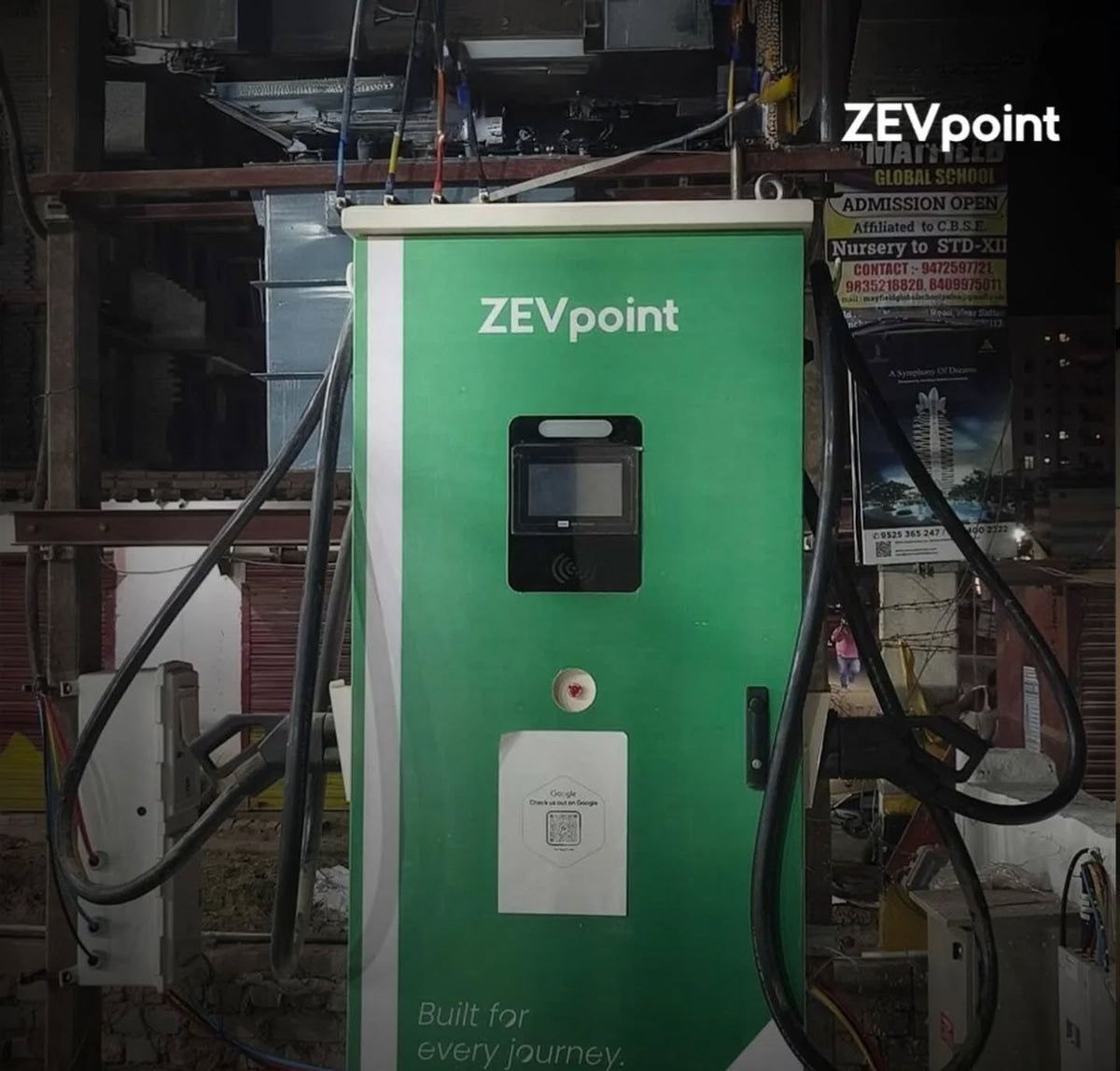

Short answer: a DC charger is a power plant in a cabinet, and it needs looking after like one. Most of what keeps it earning is not repair but routine: a network connection that never drops, clean air filters, cables hung up instead of run over, and earthing that is tested. Our DC chargers carry a 2-year warranty, are watched remotely over their network connection, take software updates over the air, and get a field visit when a fault cannot be fixed from a screen. After the warranty, an annual maintenance contract carries the same support on. Before you sign for any charger, from us or anyone, ask four questions in writing: who sees a fault first, how fast someone arrives, which parts are stocked, and what the contract covers after year two.
Why uptime is the whole business
A charger that is down on a Saturday does not lose one session. It loses every driver who saw it marked "offline" on the map and chose a competitor, and some of them do not come back. For a public site, reliability is the brand. For a fleet depot, a dead charger is a car that misses a shift. Either way, the cost of downtime is larger than the cost of the fault.
What takes the wear
- Guns and cables. They are dropped, left on the ground, driven over and pulled at an angle, so they take the most visible wear on any DC site. A holster at the right height and a cable that is hung back after every session prevent most of it.
- Air filters. Our DC chargers are air-cooled. On a dusty highway or a construction-heavy city road the filters clog, the cabinet runs hot, and the charger protects itself by delivering less. Cleaning them is a five-minute job that should be on a calendar.
- The network. A charger talks to its software over Wi-Fi or a 4G SIM. When the link drops, the charger may still charge, but nobody can see it, start it from an app, or take payment through it. An expired SIM recharge can take a site off the map as surely as a hardware fault.
- Screens and readers. Touch screens and RFID readers face sun, rain and impatient fingers every day. The cabinets are rated IP54 against dust and splashes and IK10 against impact, but a canopy over the charger does more than any rating.
- Earthing and supply. A charger monitors insulation and earth faults and will stop or refuse a session when they are wrong. Earth pits dry out and connections corrode. Test them every year, and after every monsoon on a wet site.
How support works with us
Every Zevpoint DC charger runs on OCPP and reports to our software. That gives three layers of support, in the order they are used.
- Remote. We read the charger's data and fault logs from our end, find the cause, and fix what software can fix, including firmware and configuration updates sent over the air.
- On site. When a fault needs hands, field support is sent to inspect and repair, and serviceable parts are repaired or replaced.
- After the warranty. An annual maintenance contract continues the same service after the 2-year warranty ends.
Our support desk works 10 am to 6 pm, Monday to Saturday. The owner's dashboard shows every charger's status and every session in real time, so you see what we see. Details are on own and operate.
The owner's monthly checklist
| Check | How often | Why |
|---|---|---|
| Charger shows online in the dashboard | Daily | An offline charger is invisible to drivers and to support |
| SIM or Wi-Fi plan paid up | Monthly | A lapsed plan takes the charger off the network |
| Guns hung up, cables undamaged, no cuts or crushed sections | Weekly | Cable damage is the most visible wear |
| Air filters clean | Monthly, more on dusty sites | Clogged filters make the charger run hot and slow down |
| Screen readable, RFID and QR start working | Weekly | A driver who cannot start a session leaves |
| Earth resistance tested | Yearly, and after the monsoon | A bad earth stops sessions and is a safety risk |
| A real payment from a phone | Monthly | Proves the whole chain, not just the hardware |
What we would not do
We would not buy a charger whose maker cannot see it remotely. Every site visit that could have been a remote fix is a day of downtime. We would not accept "best effort" support in a contract: response time, parts and cost after the warranty belong on paper before the order. And we would not leave the SIM on a personal prepaid plan that lapses when someone changes jobs.
Planning a station and want to see the support side first? Read how operations work, or book a site study.
Frequently asked questions
What warranty comes with a Zevpoint DC charger?
A 2-year warranty on every DC charger, from the Navigator 30 to the Nova 240. After that, an annual maintenance contract continues the service.
What needs regular maintenance on a DC fast charger?
The guns and cables, the air filters, the network connection, the screen and card reader, and the earthing. Most of it is routine checks, not repairs.
Can a DC charger be fixed remotely?
Many faults can. A charger on OCPP reports its status and fault logs, and firmware and settings can be updated over the air. Faults that need hands get a field visit.
Why does a DC charger show offline?
Most often because its Wi-Fi or 4G connection has dropped, frequently an unpaid SIM. The charger may still work, but drivers and support cannot see it or take payment through it.
What should a DC charger service contract include?
Who detects a fault first, how fast an engineer arrives, which spare parts are stocked, and what is covered after the warranty. Get all four in writing before you order.


