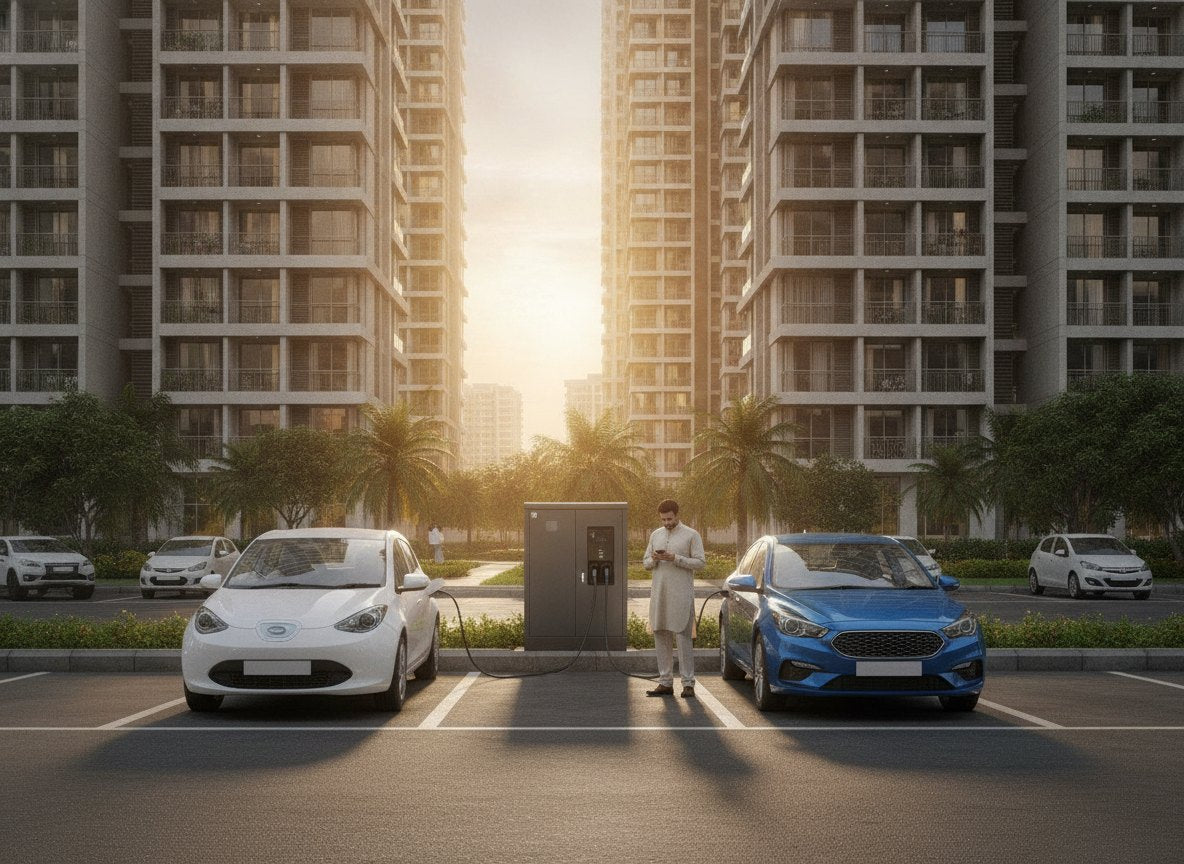
Electric cars charging at wall-mounted chargers in a housing society parking area
Housing societies & RWAs

EV charging for your housing society.

A charger for each resident, or one the whole society shares. Planned, installed and run by Zevpoint.

Two ways to do it

A charger for each resident, or one the society shares.

Individual

A charger at each resident's parking

A wall-mounted AC charger at the resident's own bay, connected to their own meter where the wiring allows. The resident pays their own electricity bill.

  • Polar and Duos wall chargers, 7.5 to 22 kW
  • Installed by our own team
  • Suits residents who charge overnight
See wall chargers →
Shared DC fast charger in a housing society common parking area with two cars charging
Shared

A shared charging point in the common area

One charging point the whole society uses: AC chargers, or a Nova 60 DC fast charger with two guns. Residents pay per charge and the society keeps the revenue.

See the Nova 60 →
What the RWA controls

The committee sets the rules.

Every rule lives in Zev Connect, our charging software, and the committee can change it any time.

Where chargers go

Bays, cable routes and the meter, drawn on your site plan before anything is built.

Who can charge

Residents only, or visitors too. Each charger can be private or open to the public.

What residents pay

A member rate for residents and a separate rate for guests.

A report for the meeting

Sessions, energy and earnings, downloadable for the committee every month.

Power

Many cars, one sanctioned load.

Charging is set to stay within the power the society has. When several cars plug into a charger at once, it shares the available power between them instead of overloading the supply.

If the society needs more, a separate EV connection from the DISCOM is an option. The site study works out which suits your building.

Single or three phase? Read the guide →
How residents pay

Three ways to start a charge, one record of every session.

RFID cardTap and charge at member rates.
Scan & payScan the QR on the charger and pay. How it works
Zevpoint appStart, stop and see every charge.
How it works

From the first visit to the first charge.

  1. Site studyAn engineer visits, measures the parking and checks the power supply.
  2. ProposalDrawings, a cost estimate and a render for the committee meeting, within 24 hours of the visit.
  3. BuildCabling and installation by our own team.
  4. Go liveChargers set up in Zev Connect with the society's rules and rates.

Society charging,
answered.

Ask us a question →

A charger on the society's existing supply stays within its sanctioned load. For more load or a separate EV connection, the society applies to its DISCOM, and the site study gives the drawings and load details the application needs.

Yes. Residents can be put in a member group with their own rate, and guests pay the public rate. The committee can change either at any time.

A charger shares its available power between the cars plugged into it, so charging stays within the limit set for the site. The site study sizes how many chargers the parking needs.

Yes. We install a wall-mounted charger at the resident's bay, connected to their own meter where the wiring allows.

By RFID card, by scanning the QR on the charger and paying, or in the Zevpoint app. Every session is recorded in Zev Connect.

Zevpoint services the chargers it installs. Faults show up in Zev Connect, many are cleared remotely, and an engineer visits when needed.

Plan your society's charging.

An engineer visits, measures the parking and checks the power. You get drawings and costs for your committee.

An engineer visits and measures. You get drawings and costs for your committee.