
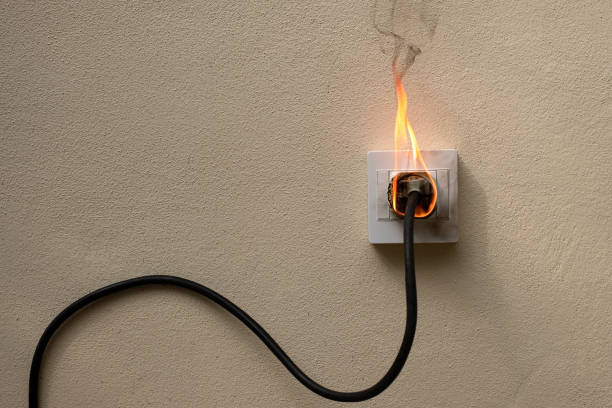

You plug in your EV at home, everything seems normal. But later, you notice a strange smell, or perhaps the charging stops. When you go to check, you find the charging socket on your wall or extension cord has melted, but the charger itself seems fine, with its lights still on or showing no error. This isn't just a minor issue; it's a serious safety hazard that needs immediate attention. Many EV owners in India face this, wondering if their expensive charger is faulty or if something else is wrong. The good news is, often the charger isn't the problem at all.
Why Does an EV Charger Socket Melt?
When a socket melts, it's almost always due to one primary reason: overheating caused by resistance. This resistance builds up when the connection between the charger's plug and the wall socket isn't perfect. Think of it like this: electricity flowing through a wire generates heat. If the connection is loose, corroded, or the socket itself is old and worn out, it can't handle the continuous, high current that an EV charger demands. This poor contact point acts like a tiny heater, eventually melting the plastic around it.
Common Culprits Behind Socket Melts:
- Loose Connections: This is the most frequent cause. If the charger's plug isn't snugly fitted into the socket, or if the internal wiring of the socket itself is loose, resistance increases significantly.
- Undersized or Low-Quality Sockets: Many older homes or even new constructions might have sockets rated for 6A (amps), which is fine for a TV or a phone charger. However, an EV charger typically draws 15A or even 32A continuously for hours. A 6A socket simply isn't built for that kind of sustained load and will overheat. Even if it's a 16A socket, if it's a cheap, low-quality one, its internal components might not be able to handle the current.
- Old or Worn-Out Sockets: Sockets have a lifespan. Over time, the internal springs and contacts can lose their tension, leading to a looser connection with the plug.
- Corrosion: In humid climates or areas with dust, corrosion can build up on the socket's pins or internal contacts, increasing resistance.
- Overloading the Circuit: While less common for the socket itself to melt if it's properly rated, if too many high-power appliances are running on the same circuit, it can lead to overall overheating, affecting the weakest link – which might be your EV charger socket.
What to Do Immediately (and What NOT to Do)
The moment you notice a melted socket, your priority is safety. Do NOT try to wiggle the plug, pull it out forcefully, or touch the melted area without caution.
Immediate Steps:
- Turn Off the MCB: Go to your main distribution board (meter box) and immediately switch off the Miniature Circuit Breaker (MCB) that supplies power to that specific socket. If you're unsure which one it is, turn off the main MCB for your home or parking area. This cuts off electricity and prevents further damage or fire risk.
- Unplug Safely (if possible): Once the power is off, and only if the plug isn't completely fused into the socket, gently try to unplug your EV charger. If it's stuck or requires force, leave it as is.
- Do NOT Reuse the Socket: Even if it looks minor, the internal damage is likely significant. The socket is compromised and unsafe.
- Inform Others: If this is in a shared parking space or a common area, put up a clear sign warning others not to use the socket.
Why Your Charger Still Works
It might seem counter-intuitive that the charger still works when the socket has melted. This is because modern EV chargers, especially the good quality ones, have multiple internal safety mechanisms. They are designed to withstand certain voltage fluctuations and often have over-current and over-temperature protection. When the socket overheats and eventually breaks the circuit (either by melting completely or tripping an MCB), the charger simply loses its power supply. It hasn't necessarily failed internally; it's just been cut off from its power source.
Think of it like your car running out of petrol. The car itself isn't broken, it just can't move because its fuel supply is gone. Similarly, your EV charger is fine, but its connection to the grid is compromised.
The Solution: Call an Authorized Electrician
This is not a DIY job. Dealing with high voltage and melted electrical components requires professional expertise. You need a qualified and certified electrician, preferably one experienced with EV charging installations.
What the Electrician Should Do:
- Inspect the Entire Circuit: The electrician shouldn't just replace the melted socket. They need to check the entire circuit, from your meter box, through the wiring, to the socket point. This includes checking the wire gauge, the condition of the MCB, and all connections.
- Replace with a High-Quality, Appropriately Rated Socket: Insist on a heavy-duty, industrial-grade 16A or 32A socket (depending on your charger's requirement) from a reputable brand. These sockets have stronger internal contacts and are designed for continuous high current draw.
- Verify Wiring: Ensure the wiring leading to the socket is of the correct gauge (thickness) to handle your EV charger's power requirements. Undersized wires can also overheat. For a 16A charger, a 2.5 sq mm copper wire is usually the minimum, but 4 sq mm is safer for longer runs or sustained use. For a 32A charger, 6 sq mm is often required.
- Check Earthing: Proper earthing (grounding) is crucial for safety. The electrician must verify that the earthing is intact and effective.
- Install a Dedicated Circuit (if needed): If your current socket is on a shared circuit with other heavy appliances, the electrician might recommend installing a dedicated circuit for your EV charger, complete with its own MCB. This isolates your charger and prevents overloading other parts of your home's electrical system.
- Use Proper Enclosures (for outdoor installations): If your charging point is outdoors or in a semi-open area (like a basement parking), ensure the new socket is installed within a weather-proof enclosure to protect it from dust, water, and humidity.
Preventing Future Socket Melts
Prevention is always better than cure, especially when it comes to electrical safety. Here's how you can avoid this issue in the future:
- Use the Right Socket: Always use a 16A or 32A socket for your EV charger, even if your portable charger comes with a 15A plug. Ensure it's a high-quality, branded product.
- Ensure a Snug Fit: When plugging in your charger, make sure it fits tightly into the socket. If it feels loose, get the socket checked.
- Regular Inspections: Periodically check your charging socket and plug for any signs of discoloration, heat, or looseness. A warm socket is normal, but a hot one is a warning sign.
- Avoid Extension Cords (unless industrial grade): Most household extension cords are not designed for the continuous high load of an EV charger. If you absolutely must use one, ensure it's an industrial-grade, heavy-duty extension cord with thick wires and a proper rating, and keep it as short as possible.
- Professional Installation: Always get your EV charging point installed by a certified electrician. They understand the specific requirements for EV charging and can ensure your wiring and sockets are up to standard.
- Monitor for Heat: During the initial few charging sessions with a new setup, occasionally check the socket area for excessive heat. If it's more than just warm, disconnect and get it inspected.
A melted EV charger socket is a wake-up call. While it's alarming, it's also an opportunity to ensure your home's electrical setup is truly safe and robust for your electric vehicle. Investing in proper electrical infrastructure now will save you from potential hazards and costly repairs down the line.
Related guides
- My Home EV Charger Stops Due to Voltage Fluctuations: Troubleshooting & Protection
- Why Your EV Charger Stops Mid-Session: Troubleshooting Automatic Cut-offs and Manual Restarts
Charger acting up?
Message Zevpoint support on WhatsApp or email support@zevpoint.com.
Is your home socket overheating while charging your EV?
A socket that feels unusually hot while your EV charges has not melted yet, but it is heading that way. Stop charging and follow the same steps as for a melted socket above. It usually means the socket and wiring cannot handle the sustained load.
A hot socket is more than a fire risk. Damaged wiring can expose live wires and give an electric shock, and an unsteady supply from a faulty socket can harm your car's charging system.
- Old homes often have wiring that is too thin for EV charging, or insulation that has worn out.
- A 32A charger on a 16A socket will burn it out.
- Pick a heavy-duty, ISI-marked socket made for continuous high-current loads.
- Do not run other high-power appliances on the same circuit while the car charges.
A dedicated home charger is built for this job. It has overcurrent protection, surge protection and ground fault detection, and lets you schedule charging and track your energy use. Before you upgrade, ask your electrician how much load your home's electrical system can carry and what has to change to charge an EV safely.
Why does a 16A home socket melt during EV charging?
A 16A socket runs a geyser or an AC without trouble, so it seems fine for an EV. The difference is how long the load lasts. A geyser runs for 15 to 30 minutes and an AC cycles on and off. A 3.3 kW portable charger draws about 15A without a break for 6 to 8 hours.
Heat grows with the square of the current and with resistance, over time (H = I²RT). Thin contacts or a loose connection raise the resistance, and hours of high current do the rest. The first signs are a socket that feels hot and discolouration around the pins.
- Industrial socket: industrial-grade sockets, often blue and built to IEC 60309, have stronger contacts and a plug that locks in place.
- Longer runs: if the parking spot is more than 20 to 25 metres from the meter box, you may need 6 sq mm or even 10 sq mm wire to limit voltage drop and heat.
- Own MCB: a dedicated MCB means a fault at the charging point trips only that circuit, not the whole house.
A hot socket also wastes energy. You pay for power that never reaches the car.
Why does your smart plug melt while charging your EV?
Most consumer smart plugs are rated for 16A at most. That is enough for a fridge, a microwave or a water heater that switches on and off. An EV charger pulls 15A (3.3 kW) or 32A (7.2 kW) non-stop for 4 to 8 hours.
The circuit board, relays, solder joints and thin wires inside a consumer smart plug are not built for that much heat for that long. The casing warps or melts, the plug burns out, and a short circuit can trip your MCB. This is especially dangerous in basement parking or society common areas.
Safer ways to get smart control:
- A charger with smart features built in: app control, scheduling, energy monitoring, and load balancing that adjusts charging speed to your home's total use so the MCB does not trip.
- An industrial-grade smart controller: rated for 32A, 40A or 63A continuous use, BIS certified, and wired in by an electrician on a dedicated circuit with the right MCB and earthing.
Ask your electrician about a dedicated circuit, the right MCB and wire size, whether the earthing is adequate, and load balancing if your sanctioned load is tight.


