
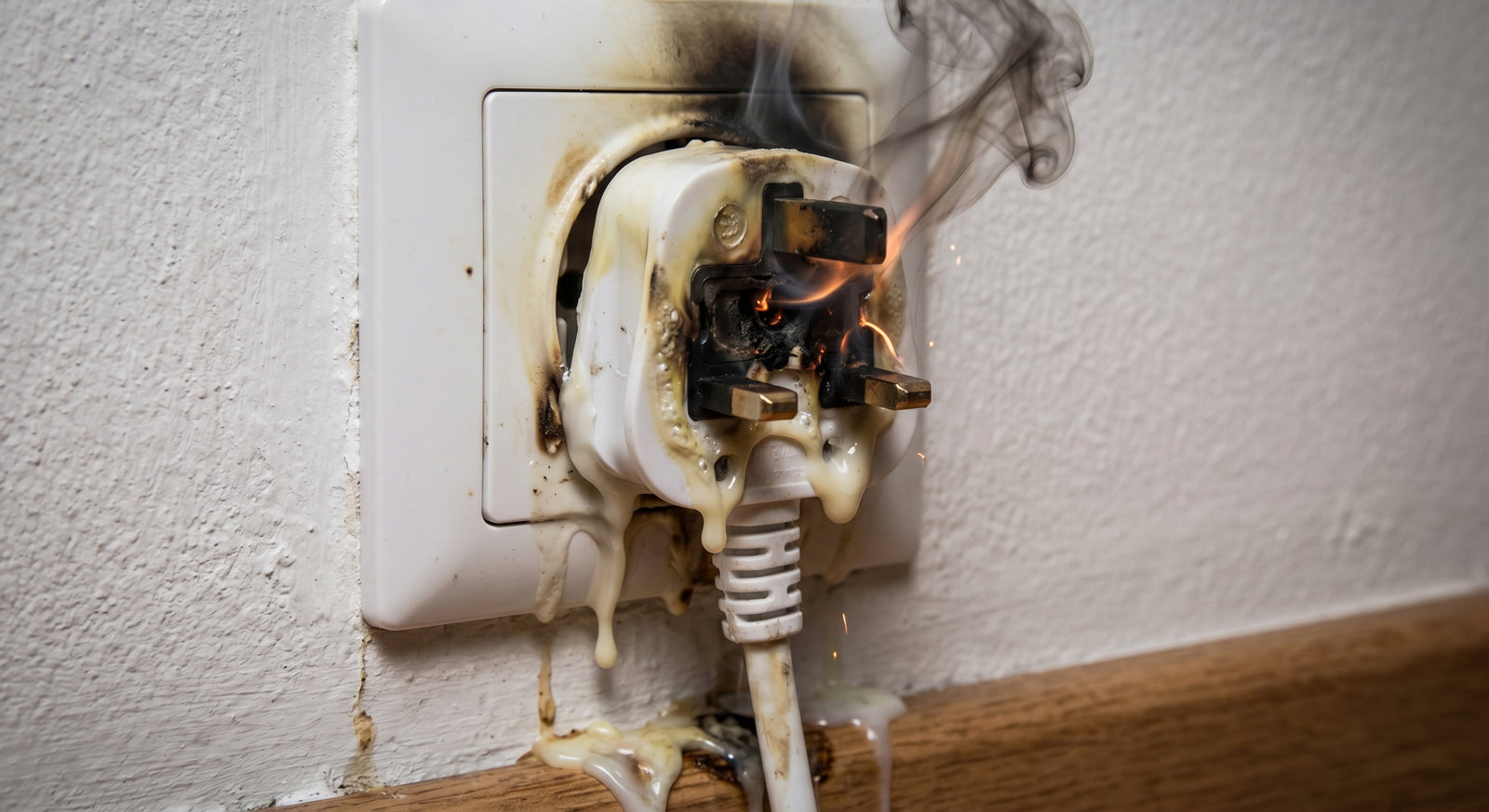

You just got your shiny new electric vehicle, and the thought of never visiting a petrol pump again is thrilling. Like many new EV owners, you probably looked for smart ways to charge at home. Perhaps you thought, "My geyser uses a 16A socket, and a smart plug handles that, so why not for my EV charger?" It's a common, logical assumption. But here’s the stark reality: that 16A smart plug, designed for appliances that run for short bursts, can melt, warp, or even burn when subjected to the continuous, high load of EV charging. It's not just a minor inconvenience; it's a serious safety hazard that many EV owners in India have unfortunately experienced.
Why Your Smart Plug Can't Handle EV Charging
The core issue isn't that smart plugs are inherently bad; it's that they are often misused for EV charging. Most consumer-grade smart plugs available in the market are rated for a maximum of 16 Amperes (16A). While this is sufficient for appliances like refrigerators, microwaves, or even a water heater that cycles on and off, an EV charger draws a continuous, high current for several hours straight.
Continuous Load vs. Intermittent Load
- Intermittent Load: Your geyser might draw 16A, but it heats water for 15-30 minutes and then switches off. It's not a continuous draw.
- Continuous Load: Your EV charger, especially a 3.3 kW or 7.2 kW AC charger, will pull 15A or 32A respectively, non-stop, for 4-8 hours to fully charge your vehicle.
This continuous, high current draw generates significant heat. Consumer smart plugs are simply not built with the internal components, wiring thickness, or heat dissipation capabilities to withstand this prolonged thermal stress. The printed circuit board (PCB) inside these plugs often cannot handle the continuous heat, leading to overheating, melting of plastic casing, and eventually, a burnt-out plug or even a short circuit.
The Role of Wiring and Components
Even if a smart plug claims a 16A rating, the quality of its internal wiring, relays, and solder joints can vary wildly. Cheaply made smart plugs might use thinner wires or lower-grade components that degrade much faster under continuous stress. This isn't just about the plug itself; it's about the entire circuit. If the smart plug fails, it can also damage your EV charger or, worse, become a fire hazard for your home or parking area.
The Dangers of Melting Smart Plugs
When a smart plug melts, it's a clear sign of severe overheating. Here's what that can lead to:
- Fire Hazard: The most critical risk. Overheated electrical components can ignite surrounding materials, leading to a fire. This is especially dangerous in enclosed spaces like basement parking or society common areas.
- Damage to EV Charger: A failing smart plug can send inconsistent power to your EV charger, potentially damaging its internal electronics, leading to expensive repairs or replacement.
- Electrical Shock: Exposed live wires from melted casings pose a serious risk of electric shock.
- Power Outages: A short circuit caused by a melted plug will trip your MCB (Miniature Circuit Breaker), leading to a power cut for your home or even your entire meter box.
Safe Alternatives for Smart EV Charging
So, if consumer smart plugs are out, what are the safe alternatives for smart EV charging at home?
1. Dedicated EV Chargers with Built-in Smart Features
The safest and most reliable solution is to invest in a dedicated AC EV charger that comes with its own smart features. Many modern home EV chargers offer:
- App Control: Schedule charging, monitor consumption, and start/stop charging from your smartphone.
- Load Balancing: Crucial for Indian homes, these chargers can dynamically adjust charging speed based on your home's overall power consumption, preventing overloads and tripped MCBs.
- Overload Protection: Built-in safety mechanisms to protect against power surges and over currents.
- Energy Monitoring: Track your electricity usage for EV charging accurately.
These chargers are designed and rated for continuous high loads and are installed with dedicated wiring and safety breakers directly from your meter box. They are built to Indian electrical standards and can withstand our often fluctuating grid conditions.
2. Industrial-Grade Smart Controllers
If you absolutely need a smart control layer between your existing (non-smart) EV charger and the power source, look for industrial-grade smart controllers. These are vastly different from consumer smart plugs:
- Higher Amperage Ratings: Typically rated for 32A, 40A, or even 63A, designed for continuous operation.
- Robust Construction: Built with heavy-duty components, thicker wiring, and superior heat dissipation.
- Certification: Look for products that comply with relevant electrical safety standards (e.g., BIS certification in India).
However, installing such a controller usually requires a qualified electrician to ensure it's correctly wired into a dedicated circuit with appropriate MCBs and earthing. Do not attempt a DIY installation with these.
What to Ask Your Electrician
When you're discussing EV charger installation with your electrician, here are a few key questions:
- "Can we install a dedicated circuit from my meter box for the EV charger?"
- "What is the appropriate MCB rating and wire gauge for my EV charger (e.g., 32A MCB for a 7.2 kW charger)?"
- "Is the earthing adequate for the EV charger installation?"
- "Can you suggest a load balancing solution if my home's sanctioned load is limited?"
Remember, the cost of a proper, safe installation is a small price to pay compared to the potential risks and damages of cutting corners. Your EV is a significant investment; ensure its charging setup is equally robust and safe.


