
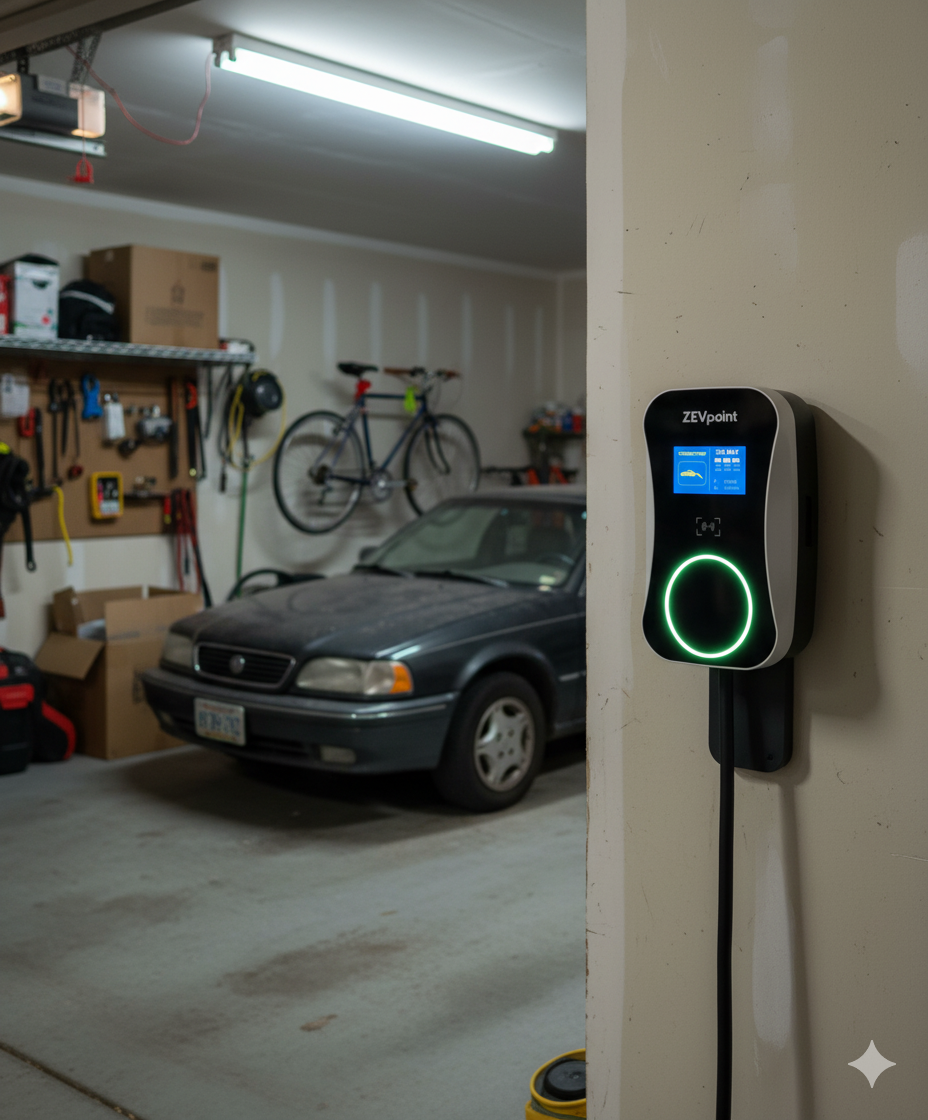

One of the most common questions from businesses and property owners looking to install EV chargers in India is: should I go with AC or DC charging? The answer depends on your location type, budget, target users, and business model. This guide breaks down the key differences, costs, and ideal use cases for both AC and DC charging in the Indian context.
How AC and DC Charging Actually Work
AC Charging: Your EV has a built-in onboard charger that converts AC (Alternating Current) from the grid into DC (Direct Current) for the battery. The AC charger simply delivers grid power to the car — the car does the conversion. This is why AC charging is slower: the onboard converter has limited capacity (typically 7.5 kW to 11kW in India).
DC Fast Charging: A DC charger bypasses the car's onboard converter entirely. It has its own powerful AC-to-DC converter and feeds DC directly into the battery. This is why DC charging is much faster — the external converter can handle 30kW to 240kW or more.
Head-to-Head Comparison
| Feature | AC Charger | DC Fast Charger |
|---|---|---|
| Power Output | 3.3kW – 22kW | 30kW – 240kW+ |
| Charging Time (20-80%) | 4–6 hours | 20–60 minutes |
| Equipment Cost | ₹15,000 – ₹40,000 | ₹3 lakh – ₹15 lakh |
| Installation Cost | ₹5,000 – ₹7,000 | ₹50,000 – ₹5 lakh |
| Electrical Load | Single-phase (3.3–7.4kW) | Three-phase, dedicated transformer |
| Connector (India) | Type 2 | CCS2 |
| Battery Impact | Gentle, minimal degradation | Higher heat, moderate impact if overused |
| Charging Cost to User | ₹5–8/kWh (home) ₹12–18/kWh (public) | ₹18–25/kWh (public) |
| Space Required | Wall-mounted, minimal | Floor-standing, larger footprint |

Best Use Cases for AC Charging
AC chargers are ideal where vehicles are parked for extended periods:
Homes & Apartments
The most natural fit. A 3.3kW or 7.4kW AC charger installed in your parking spot charges your EV overnight while you sleep. At ₹5–8 per kWh on domestic tariff, it is the cheapest way to charge. A 7.5 kW charger gives you roughly 40–50 km of range per hour of charging.
Office Parking
Employees park for 8–10 hours daily. Even a slow 3.6 kW AC charger can deliver a full charge in that time. Companies can install 5–10 AC chargers for the cost of a single DC fast charger, serving more employees.
Hotels & Resorts
Guests stay overnight. AC destination chargers are a premium amenity that attracts EV-driving guests. Low installation cost makes it easy to deploy across multiple parking spots.
Shopping Malls
Shoppers typically spend 2–4 hours. A 7.5kW or 22kW AC charger can add 60–100 km of range during a shopping trip — enough for most urban EV owners.
Best Use Cases for DC Fast Charging
DC chargers are essential where speed is critical:
Highway Corridors
Long-distance drivers need quick top-ups. A 60kW DC charger can take a car from 20% to 80% in about 40 minutes — roughly the time it takes for a meal break. India's major highway networks (Delhi-Mumbai Expressway, Chennai-Bangalore, etc.) require DC fast chargers at every 50–100 km.
Fleet & Commercial Hubs
Delivery fleets, ride-hailing vehicles, and commercial EVs can go with a mix of AC & DC chargers for their hubs. DC fast charging between shifts maximises vehicle utilisation, while AC charging after regular intervals can help elongate vehicle's overall battery life.
Petrol Station Conversions
Existing petrol bunks adding EV charging need the quick turnaround that only DC chargers provide. Indian Oil, BPCL, and HPCL are all adding DC fast chargers at their fuel stations.
Urban Fast-Charge Hubs
Dedicated charging stations in cities that serve drivers without home charging access. These need DC chargers for competitive service — drivers expect 30–45 minute stops, not hours.
The Business Case: ROI Comparison
| Metric | AC (7.5kW) | DC (30-60kW) |
|---|---|---|
| Total Setup Cost | ₹60,000 – ₹90,000 | ₹3 lakh – ₹10 lakh |
| Revenue per Session | ₹150 – ₹300 | ₹400 – ₹800 |
| Sessions per Day | 2–3 (long duration) | 8–15 (fast turnaround) |
| Monthly Revenue (dependent on other factors like location, vehicle inflow etc.) | ₹9,000 – ₹25,000 | ₹50,000 – ₹2,00,000 |
| Payback Period | 12-14 months | 24-48 months |
Key insight: AC chargers have lower revenue per unit but also much lower investment. DC chargers generate higher absolute revenue but require significantly more capital. The best strategy often combines both — AC chargers for base-load parking and DC for quick turnaround spots.
The Smart Approach: Mix Both
India's current public charging infrastructure is roughly 65% AC and 35% DC. Leading CPOs are increasingly deploying mixed configurations:
- Shopping malls: 4–6 AC chargers + 1–2 DC fast chargers
- Housing societies: All AC chargers (3.6–7.5 kW) with smart load management
- Highway stops: 2–4 DC fast chargers + 2 AC chargers for longer stops
- Corporate parks: 10+ AC chargers across parking levels + 1–2 DC for visitors
Making Your Decision
Ask yourself these questions:
- How long do vehicles stay parked? More than 2 hours → AC is sufficient. Less than 1 hour → DC is needed.
- What is your electrical capacity? Limited power → start with AC. Three-phase with spare capacity → DC is feasible.
- What is your budget? Under ₹1 lakh → AC. ₹3 lakh+ → consider DC.
- Who are your target users? Residents/employees → AC. Highway travellers/fleets → DC.
Not sure which charger type suits your location? Zevpoint offers free site assessments to help you choose the right mix of AC and DC chargers based on your location, footfall, and budget. Book a consultation today.


