

Quick Answer
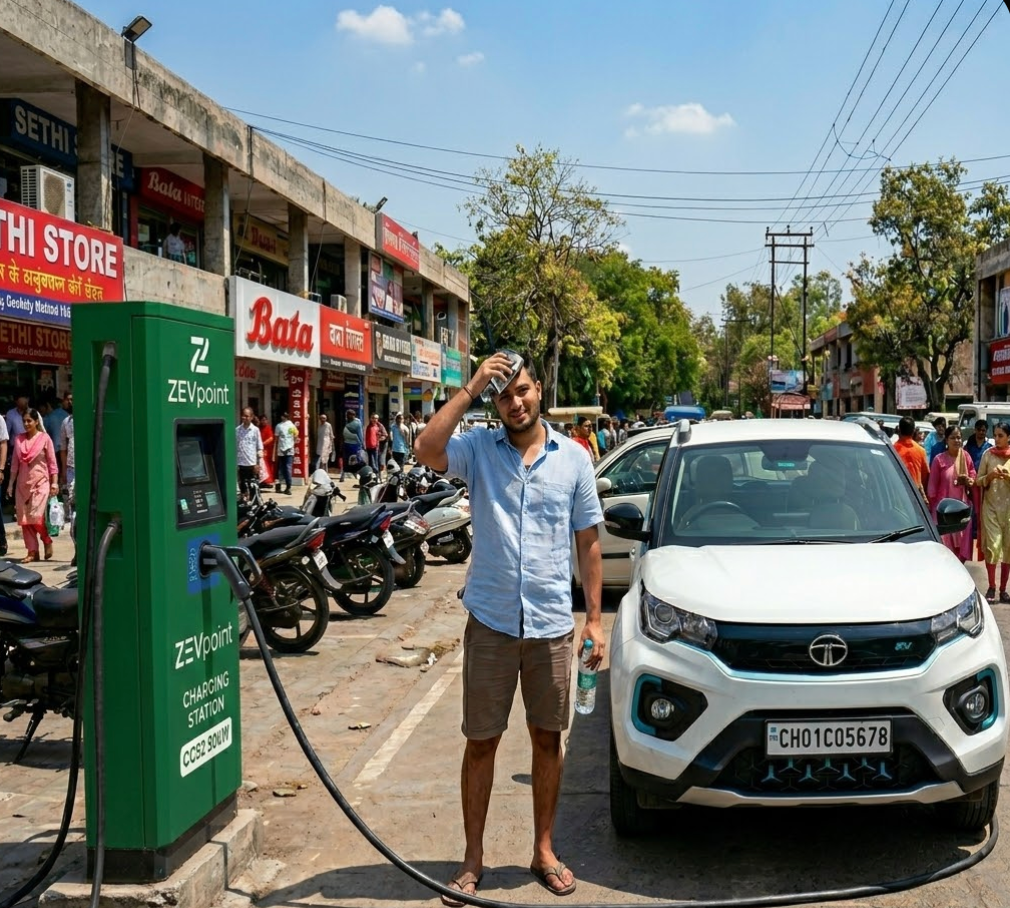
Yes, you can safely charge an electric vehicle even when outdoor temperatures reach 45°C. Modern EVs automatically protect themselves. The battery management system (BMS) slows or pauses charging if the battery becomes too hot. The real risk is not immediate damage; it is long‑term battery degradation when a hot battery is repeatedly charged to a high level or charged immediately after a long, hot drive.
If you follow three simple rules, your EV battery will remain healthy:
- Let the car cool before charging
- Prefer night charging
- Avoid keeping the battery at 100% in extreme heat
Why Indian Summers Are Different
Many EV guidelines online come from Europe or North America where summer temperatures are 25–35°C.
Electric vehicle charging in India faces much harsher conditions compared to most countries. In regions such as Delhi NCR, Haryana, Rajasthan and Gujarat, summer temperatures regularly reach 45°C to 48°C, especially in open parking areas and terraces. Apartment basement parking also traps heat, and chargers often operate in poorly ventilated spaces. Along with high ambient temperature, Indian homes frequently experience voltage fluctuations, loose earthing and sudden power restoration after outages. These factors significantly increase thermal stress on EV chargers and charging cables, which is why charging practices that work in Europe or the US may not always be safe or reliable under Indian conditions.
High temperature affects lithium batteries in two ways:
- Faster chemical aging inside the cells
- Higher electrical resistance during charging
- This is why you may notice slower charging in peak afternoon heat. The car is not faulty — it is protecting the battery.
What Actually Happens Inside the Battery
All modern electric vehicles use lithium‑ion batteries (typically LFP or NMC chemistry). Heat accelerates a natural aging process called electrolyte breakdown.
In simple terms:
- Heat + high charge level = faster aging
- Heat + fast charging = higher stress
- Heat + storage at 100% = permanent capacity loss
The battery management system continuously monitors:
- Cell temperature
- Charging current
- Voltage balance
If temperature rises too much, the system will:
- Reduce charging speed
- Pause charging
- Activate cooling systems
This is normal behaviour and a sign that the battery protection system is working correctly.
LFP vs NMC Batteries in Heat
| Feature | LFP Batteries | NMC Batteries |
|---|---|---|
| Heat tolerance | Higher | Moderate |
| Degradation in summer | Slower | Faster |
| Ideal charging habit | 80–100% acceptable | Prefer 20–80% |
| Sensitivity to hot fast charging | Low | High |
Both are safe in Indian summers, but NMC batteries benefit more from careful charging habits.
When It Is Safe to Charge
Safe times:
- Late evening
- Night
- Early morning
- After the car has been parked for 60–120 minute
Not ideal - Immediately after highway driving
- Direct sunlight parking
- Peak afternoon (2 PM – 5 PM)
The single most important habit: do not plug in immediately after a long drive in summer heat.
Why Charging Slows Down in Summer
Many owners think the charger or electricity supply is faulty when charging becomes slow in summer. In reality, the car is reducing current intentionally.
The BMS limits charging when battery temperature crosses safe limits. Slower charging actually protects battery life.
If your car charges normally at night but slowly in the afternoon, your system is working correctly.
Signs the Battery Is Too Hot
Watch for these indicators:
- Charging speed suddenly drops
- Cooling fan runs continuously
- Charging stops and restarts
- Dashboard warning: high battery temperature
These are protective actions — not defects.
How Heat Affects the Charger (Not Just the Car)
The charger itself also faces stress in Indian summers. Electronics dislike heat even more than batteries.
High temperature can cause:
- Thermal cut‑off
- Cable heating
- Plug softening
- Premature component wear
A charger installed in a closed metal box, balcony enclosure, or sun‑facing wall can easily reach internal temperatures above 70°C.
Correct Home Charger Installation (Very Important)
Follow these placement rules:
Best location
- Covered parking
- Ventilated wall
- Shaded pillar
Avoid
- Direct sunlight
- Sealed cabinets
- Above inverter or generator exhaust
- Near outdoor AC condenser outlet
Ventilation Rule
Your charger should feel warm, never hot. If you cannot comfortably keep your hand on the casing, ventilation is insufficient.
Cooling Down the Car Before Charging
After driving in summer:
- Park in shade
- Turn off vehicle
- Wait 60–90 minutes
- Then start charging
This single habit can significantly reduce long‑term battery degradation.
Ideal Charging Percentage in Summer
| Usage Type | Recommended Level |
|---|---|
| Daily city driving | 70–80% |
| Next‑day long trip | 90–100% (charge just before departure) |
| Parking for several days | 40–60% |
Keeping the battery at 100% in hot weather is the biggest contributor to accelerated aging.
Should You Use Fast Charging in Summer?
Occasional fast charging is safe.
Avoid frequent fast charging when:
- Battery is already hot
- Outside temperature exceeds 40°C
- Car was just driven on highway
If possible, allow a short cooldown before using a DC fast charger.
Protecting Your Charging Cable and Plug
Heat affects connectors too.
Tips:
- Do not leave the connector on the ground
- Avoid tightly coiling hot cables
- Keep plug out of sunlight
- Check for discoloration or smell
- Warm is normal. Very hot is not.
Electrical Protection (Often Ignored)
Summer brings voltage fluctuation and thunderstorms. Electrical issues damage chargers more often than heat.
Strongly recommended:
- Proper earthing
- Surge protection device (SPD)
- Correct wire gauge
- Dedicated MCB/RCD protection
A charger connected to poor wiring will fail much sooner than one exposed to heat.
Common Myths
Myth: Charging in summer damages the battery immediately
Reality: Damage is gradual and caused by repeated high‑temperature charging habits, not a single charging session.
Myth: Slower charging means charger fault
Reality: It is temperature protection by the vehicle.
Myth: Keeping 100% charge is best for battery
Reality: In heat, it is the worst practice for battery longevity.
Frequently Asked Questions
1. Can I charge my EV in 45°C weather?
Yes. The vehicle automatically controls charging to stay within safe temperature limits.
2. Should I only charge at night?
Night charging is ideal but not mandatory. Avoid charging immediately after a hot drive.
3. Why does my EV charge slower in summer?
The battery is hot. The system reduces current to protect the cells.
4. Can heat cause battery fire while charging?
Under normal conditions, no. Modern EVs have multiple temperature and current protections.
5. Is parking in sun dangerous while plugged in?
It is not dangerous, but it increases battery aging and slows charging.
6. Should I keep my battery at 100% daily?
Not in summer. 70–80% is healthier for long battery life.
7. Does an AC charger harm the battery in heat?
No. AC charging is gentler than fast charging.
8. My charger stops charging randomly in afternoon — problem?
Usually thermal protection. Check ventilation before assuming a fault.
9. How long should I wait after driving before charging?
Ideally 60–90 minutes in peak summer.
10. Is frequent fast charging bad in summer?
Yes, especially when the battery is already hot.
Practical Summer Checklist
- Park in shade whenever possible
- Allow cooldown before charging
- Prefer night charging
- Keep battery under 80% for daily use
- Ensure charger ventilation
- Install surge protection
- Inspect cables monthly
Final Takeaway
Indian summers are harsh, but modern EVs are designed to handle them. Heat does not suddenly destroy batteries — habits do. Charging a hot battery to 100% every day in peak afternoon heat will age the battery faster. Charging after cooldown, in shade, and within moderate charge levels will keep the battery healthy for years.
If you treat the battery like a smartphone — never overheated and rarely kept at 100% — it will last far longer than most owners expect.


