
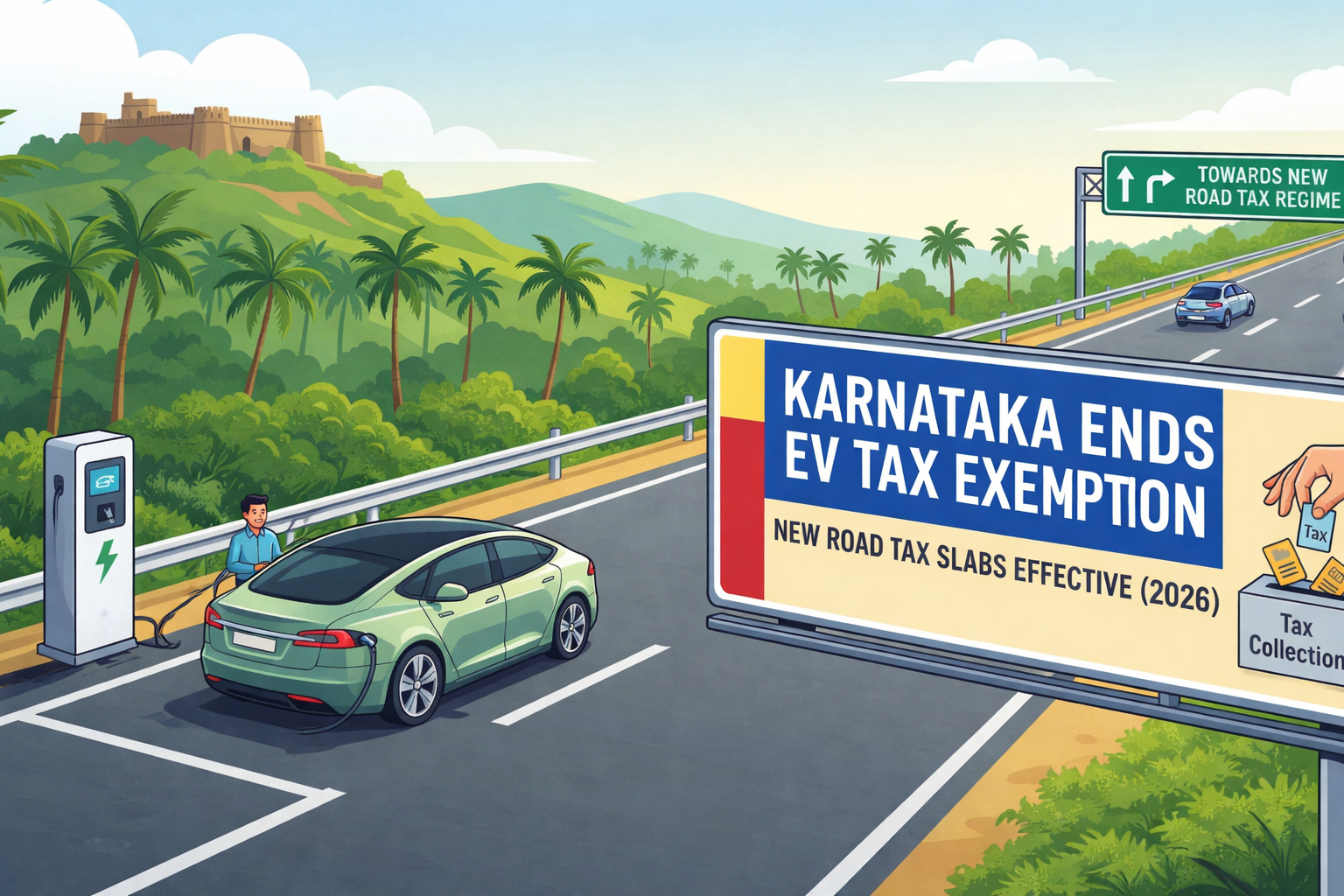

Karnataka removes EV road tax exemption: a clear guide for buyers (April 2026)
If you are planning to buy an electric vehicle in Karnataka, there is one new cost you need to account for before finalizing your budget road tax.
Starting April 10, 2026, the state has introduced a lifetime road tax on electric vehicles through an amendment to the Karnataka Motor Vehicles Taxation Act. The era of zero road tax on EVs in the state has come to a close. What's the Deal with the Karnataka EV Tax?
How much will you pay?
The tax is calculated as a percentage of your vehicle's purchase price and is paid once at the time of registration.
Vehicle price Tax rate
Up to ₹10 lakh 5%
₹10 lakh-₹25 lakh 8%
Above ₹-25 lakh 10%
To put that in real numbers - a ₹15 lakh EV now attracts ₹1.2 lakh in road tax at registration.
Does this affect you if you already own an EV?
No. This applies only to fresh registrations from April 10, 2026 onwards. Existing owners who registered under the old exemption are not impacted.
- New EVs: Expect to pay a percentage of the vehicle's original invoice value. This percentage varies based on the type of vehicle.
- Older EVs: The tax amount might be depreciated based on the vehicle's age.
What about two-wheelers?
Current indications suggest electric two-wheelers will not be covered under this tax. However, confirm this with your RTO or dealer at the time of purchase, as official clarity is still emerging.
How to handle this at registration
Include the road tax in your total purchase budget before you finalize a vehicle. At the RTO, pay through the Karnataka transport department's official portal or at the counter directly. Keep your payment receipt it is your proof of compliance.
Does this make EVs a bad deal?
Not necessarily. Road tax is a one-time payment, not a monthly or annual expense. When you look at the full ownership picture lower electricity costs versus fuel, reduced servicing frequency, and longer-term savings EVs still hold up well financially. This is an added upfront cost, not a reason to reconsider electric mobility altogether.
Here's a dose of perspective: even with the tax, EVs can still be cheaper to run than petrol or diesel cars in the long run. The cost of electricity is generally lower than fuel, and EVs require less maintenance.
Wiring and Charging Considerations
While you're dealing with taxes, it's worth revisiting your home charging setup. Here are a few points:
- Wiring Check: Get your home wiring inspected by a qualified electrician to ensure it can handle the load of an EV charger.
- MCB Rating: Make sure your MCB (miniature circuit breaker) is appropriately rated for your charger. A 7.2kW charger needs a higher-rated MCB than a standard wall socket.
- Earthling: Proper earthing is crucial for safety. Don't skip this step.
These are all things an electrician will check during installation. If you live in a society, make sure to get the necessary permissions before installing a charger.


