
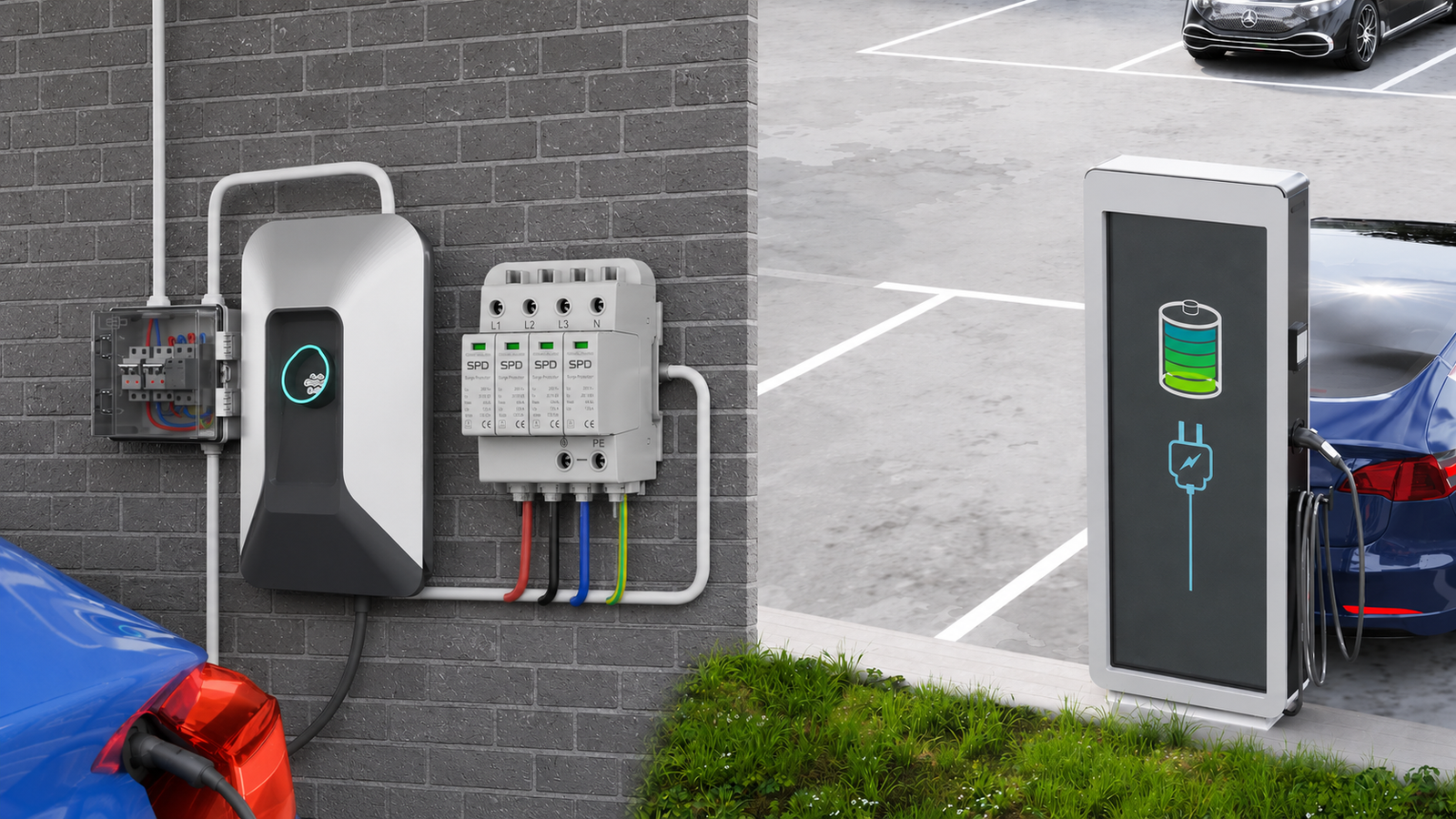

Power surges in India? They're not just an inconvenience; they can fry your expensive EV charger faster than you can say "load shedding." We're talking about voltage spikes that can damage the sensitive electronics inside your charger, leaving you with a bricked device and a hefty repair bill. This guide will walk you through protecting your EV charger from these electrical assaults, keeping your EV juiced up and your wallet happy.
Understanding Power Surges and Their Impact
A power surge is a sudden, unexpected spike in voltage. Think of it like a water pipe suddenly getting hit with a massive burst of pressure. Your home's electrical system is designed for a steady 220-240V. When that voltage jumps much higher, even for a fraction of a second, it can overwhelm your appliances, including your EV charger.
What causes these surges? Here are the usual suspects:
- Lightning strikes: The most dramatic and destructive.
- Grid switching: When the power company switches between power sources, voltage fluctuations can occur.
- Faulty wiring: Loose connections or damaged wires can create surges.
- Turning appliances on and off: Large appliances like refrigerators and ACs can cause small surges when they cycle on and off.
The impact on your EV charger can range from minor glitches to complete failure. At the very least, surges can shorten the lifespan of your charger's components. And replacing a charger can set you back anywhere from ₹10,000 to ₹1 lakh, depending on the type and features.
Essential Surge Protection Measures
Here’s how to safeguard your EV charger from power surges:
1. Install a Surge Protection Device (SPD)
This is your first line of defense. An SPD is designed to divert excess voltage away from your sensitive electronics. There are two main types:
- Whole-house SPDs: Installed at your main meter box, these protect your entire home, including your EV charger. They're more expensive (₹5,000 - ₹15,000 + installation) but offer comprehensive protection.
- Point-of-use SPDs: These plug into a wall socket and protect only the devices connected to them. They're cheaper (₹1500 - ₹3,000) but less effective for large surges. Use these *in addition* to a whole-house SPD, not as a replacement.
Important: Make sure any SPD you buy meets Indian safety standards (look for ISI certification). Also, SPDs have a limited lifespan and need to be replaced every few years, or after a major surge. Check the indicator light regularly.
2. Dedicated Circuit and MCB
Your EV charger should have its own dedicated circuit with a Miniature Circuit Breaker (MCB) in your distribution box. This prevents overloading the circuit and reduces the risk of surges. A qualified electrician can install this for you. Don't try to DIY this.
The MCB rating should match the charger's power requirements. For example, a 7.4kW charger typically needs a 32A MCB.
3. High-Quality Wiring and Grounding
Proper wiring and grounding are crucial for safety and surge protection. Use high-quality, appropriately sized cables for your charger's circuit. Ensure that the grounding is properly connected to earth. Faulty grounding can make surge protection ineffective and even dangerous.
4. Unplug During Storms
This seems obvious, but it's worth repeating. If there's a thunderstorm, unplug your EV charger. Lightning strikes can induce massive surges that can overwhelm even the best surge protection. It's better to be safe than sorry.
5. Consider a UPS (Uninterruptible Power Supply)
For extra protection, especially in areas with frequent power outages, consider a UPS. A UPS provides backup power during outages and can also help smooth out voltage fluctuations. While it adds to the cost, it can be a worthwhile investment for sensitive chargers.
Note: A standard home UPS may not be sufficient for a high-power EV charger. Look for industrial-grade UPS systems designed for heavy loads.
Choosing the Right Surge Protection Device
Not all SPDs are created equal and also the in-built Surge Protection inside a charger at most times is not sufficient. Here’s what to look for:
- Surge current rating: This indicates how much surge current the device can handle. Higher is better. Look for a rating of at least 40kA (kiloamperes).
- Voltage protection rating (VPR): This indicates the maximum voltage that the device will let through. Lower is better.
- Response time: This is how quickly the device reacts to a surge. Faster is better.
- Certification: Make sure the device is certified by a reputable organization like BIS (Bureau of Indian Standards).
Regular Maintenance and Inspections
Surge protection isn't a one-time fix. It requires regular maintenance and inspections.
- Check SPDs regularly: Look for indicator lights or alarms that indicate the device is still working. Replace the SPD if it's damaged or has reached the end of its lifespan.
- Inspect wiring: Have your electrician inspect your home's wiring and grounding at least once a year. Look for loose connections, damaged wires, or signs of corrosion.
- Monitor voltage: Use a multimeter to monitor the voltage at your charger's outlet. If you notice frequent voltage fluctuations, consult an electrician.
Working with Your Society and Electrician
If you live in a society, discuss your EV charger installation plans with the management committee. They may have specific requirements for wiring, surge protection, and load management. Some societies may already have surge protection measures in place for the entire building.
Always hire a qualified electrician for any electrical work, including EV charger installation and surge protection. Don't cut corners on safety. Ask your electrician to provide a detailed report of the installation, including the wiring diagram, MCB rating, and grounding details.
Pro Tip: Before buying a charger, ask your electrician to assess your home's electrical system and recommend the appropriate surge protection measures. This can save you from costly surprises later.
Protecting your EV charger from power surges is an investment in its longevity and your peace of mind. By taking these steps, you can keep your EV charged and ready to go, without worrying about the next voltage spike.


