

It's Not Just the Heat. It's Everything Together.
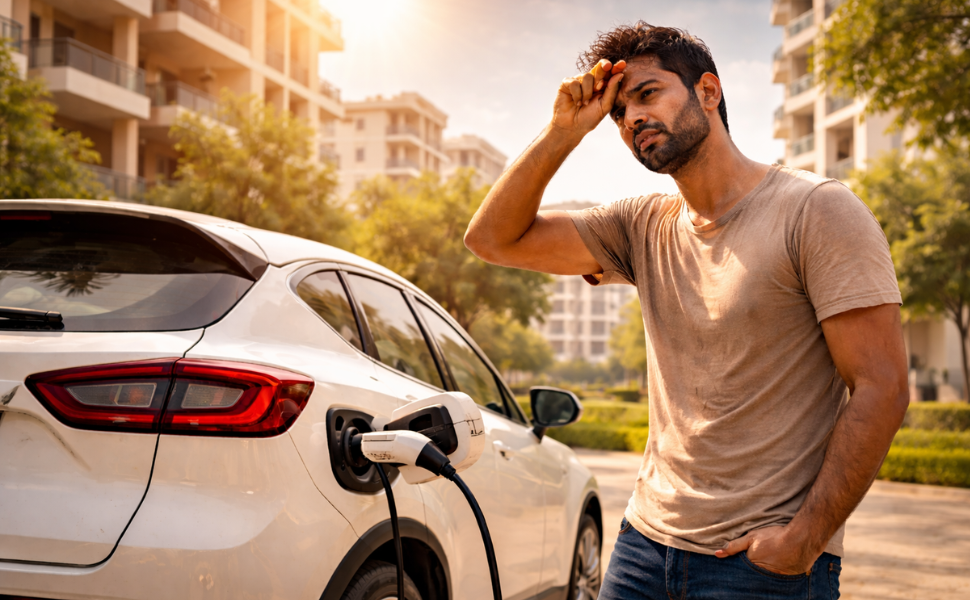
If you own an EV in India, you already know that summer here is not a mild affair. We're talking 42°C afternoons, roads hot enough to fry an egg, and power grids groaning under the weight of a million ACs running simultaneously. And right in the middle of all this, you still need to charge your car every day and get to where you're going.
The good news is that your EV can handle Indian summer but it needs a little help from you. A few simple habits can protect your battery, keep your charging smooth, and save you from unnecessary headaches. This article breaks it all down , whether you've had your EV for three years or three weeks.
Why Does Summer Affect EV Charging at All?
Think of your EV battery like a bottle of cold water on a hot day. Leave it in the sun and it warms up fast. A warm battery doesn't work as well as a cool one it charges more slowly, holds slightly less charge, and wears out faster if you keep stressing it in the heat.
Your battery has a sweet spot roughly between 20°C and 35°C. When temperatures push above that, the car's brain (called the Battery Management System) slows things down automatically to protect the battery, so on a 43°C afternoon, your car isn't being difficult it's being careful.
This is also why you might notice:
- Charging feels slower than usual
- Your range estimate drops compared to winter months
- The car takes longer to reach full charge
None of this means something is broken. It's summer. This is normal.
What You Can Do About It
Charge When Electricity Load Is Low
Late night and early morning roughly between 11 PM and 6 AM is the best time to charge in summer. Here's why it helps on multiple levels.
The electricity grid is under less pressure, so voltage is more stable. Your home itself is drawing less load (fewer appliances running). And the outside temperature is cooler, which means your battery charges more comfortably. In some states, electricity is also cheaper during these hours. It's a win on every front.
Charge a Little Every Day
A lot of new EV owners treat their car like a phone they only charge when the battery is nearly dead. That's not ideal for EVs, especially in summer.
Try to top up a little every night rather than running it down to 10% and then charging to 100% in one go. Think of it like watering a plant a little every day is better than flooding it once a week. Keeping the battery between 20% and 80% regularly is much gentler on it over time.
Don't Charge Immediately After Riding
After a long drive on a hot day, your battery is warm sometimes quite warm. Plugging in immediately and pushing more energy into an already-hot battery puts unnecessary stress on it.Give it 30 to 45 minutes to cool down before you plug in. Park in a ventilated spot, let things settle, and then start charging. It's a small habit that adds up to better battery health over the years.
Avoid Charging in Direct Sunlight
If your parking spot is outdoors and gets direct afternoon sun, try not to charge during those peak hours. The sun heats up the car, the battery gets warm, and charging efficiency drops. Even moving your charging time to after sunset makes a real difference.
If you have no choice but to charge outdoors, at least try to use a timer so the charging happens at night when the car has cooled down.
Find Shade for Your EV
This one sounds obvious but it makes a bigger difference than people realize. A car parked in shade can be 10–15°C cooler inside than one sitting in direct sun. That means less energy wasted cooling the cabin, better charging efficiency, and less stress on the battery overall.
Covered parking, a spot under a tree, the shaded side of a building anything helps. If shaded parking genuinely isn't available, a good windshield sunshade is worth buying. It costs a few hundred rupees and keeps the cabin noticeably cooler.
Car Not Charging? t’s Not the Charger at All
This is one of the most common moments of panic for EV owners in summer. You plug in, and the car either doesn't start charging or charges unusually slowly. The first thought is always — is my charger faulty?
Sometimes, yes. But more often in summer, the problem is heat — and it could be coming from any one of several places.
The charging cable and wires heat up during charging, especially if you're doing long sessions. If the wiring inside your home is undersized for example, the recommended wire size for EV charging is 6mm but you have used 4mm it will heat up faster and may not handle the load reliably. This is worth getting checked by an electrician if you haven't already.
The charging gun (the connector you plug into the car) can also get hot, especially in outdoor summer conditions. Most modern chargers will automatically slow down or stop if the gun overheats, as a safety measure.
The car's battery itself if you've just come back from a long drive and the battery is already warm, and then you park in the sun and try to charge, the car will intentionally limit charging speed to protect itself.
So if charging feels off, before assuming your charger is faulty, ask: Is anything hot right now? The cable? The connector? The car itself? Give things 30–45 minutes to cool down and try again. You'll often find it resolves on its own.
This Is Where a Smart Charger Really Helps
A basic charger does one thing it sends electricity into your car. A smart charger does that and a lot more, and in Indian summer, those extra features are genuinely useful.
Here's what to look for:
Scheduled Charging: Set a fixed time for charging to begin like midnight or off-peak hours. You can plug in anytime, and the charger will automatically start at the scheduled time. No need to remember later.
Delayed Charging: Postpone charging for a short duration after plugging in. This is especially useful in summer when you’ve just returned from a drive, you can delay charging to let the battery cool down before it starts charging, which helps protect battery health.
Current adjustment: This lets you control how fast the car charges. On very hot days, or if your home wiring isn't heavy-duty, you can dial down the charging speed. Slower charging generates less heat, which is easier on both your wiring and your battery.
Charging monitoring: A good smart charger shows you what's happening in real time how much power is flowing, how long it will take, and how many units of electricity have been used. This helps you spot problems early and also keeps track of your electricity costs.
When you're buying a charger for your home or if you're thinking about upgrading try to find one that has at least these three features. You don't need the most expensive option, but having these basics makes a noticeable difference in how smoothly your charging experience goes, especially through the summer months.
Related guides
- Is Your EV Battery Losing Charge Too Fast? Smart Charging Tips to Extend Its Life
- Is It Safe to Charge an EV in 45°C Heat? India Summer Charging Guide
Looking for a reliable EV charger?
Explore ZEVpoint home chargers or call our sales team.


