
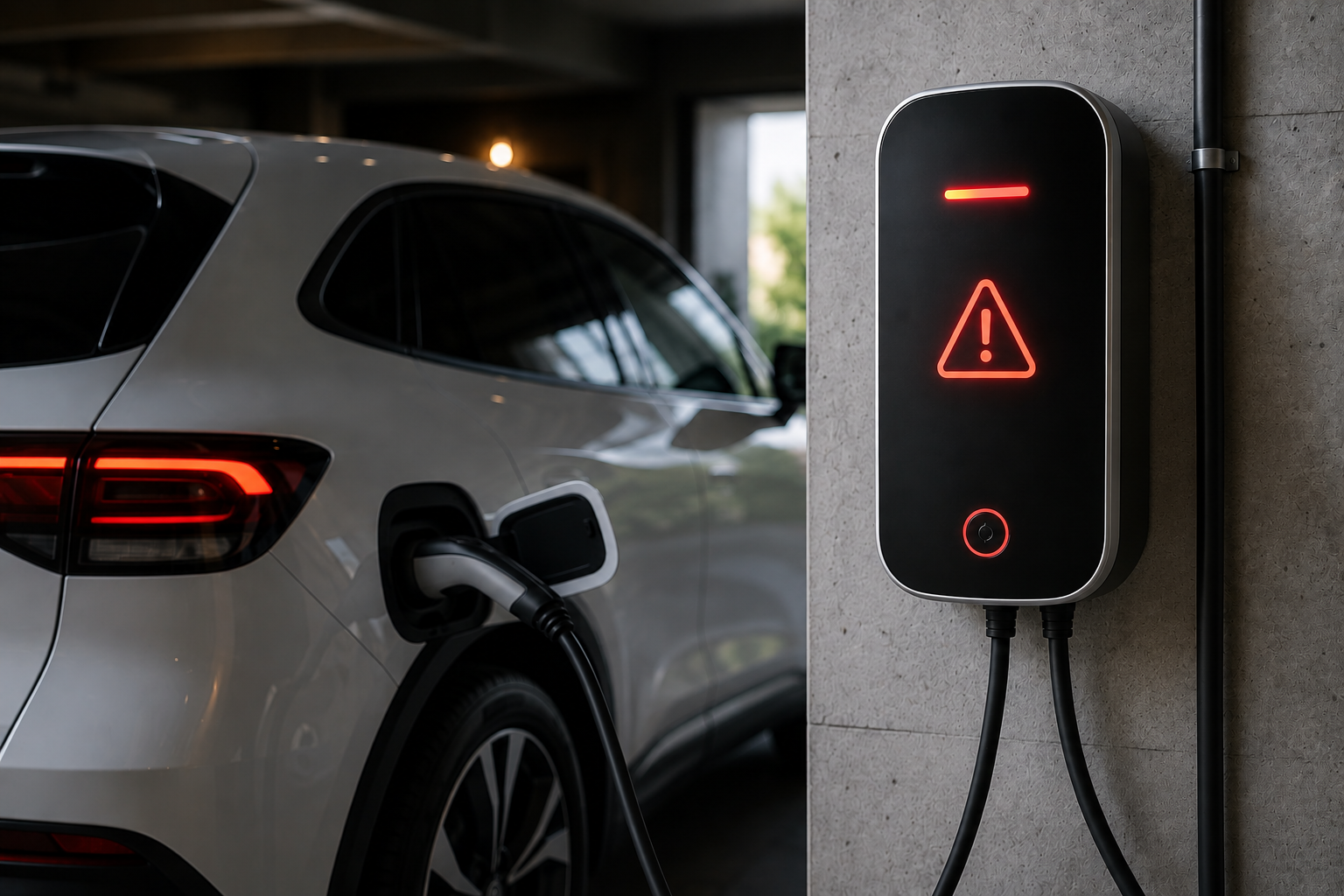

Imagine this: You plug in your shiny new EV, the charger lights up, and you walk away, expecting a steady charge. But barely a minute or two later, you hear a click, see the lights dim, and realise the charger has shut down. You unplug, plug back in, and the cycle repeats. It's frustrating, to say the least, and a common problem for many Indian EV owners. This isn't just a minor glitch; it points to deeper issues with your electrical supply or even the grid itself. Let's break down why this happens and what you can do about it.
Why Your EV Charger Shuts Off Quickly: The Core Reasons
When your EV charger cuts off after just 1-2 minutes, it's usually a protective measure. Chargers are designed with safety in mind. If they detect something abnormal in the electrical supply, they'll shut down to prevent damage to themselves, your EV, or your home's wiring. The most common culprits are voltage issues and grid instability.
Understanding Voltage Fluctuations
Voltage is the 'pressure' of electricity. In India, our standard single-phase supply is supposed to be around 230V. Three-phase supply, common for higher loads, is 400V. However, these numbers are rarely exact. Our grid often experiences fluctuations, especially in residential areas or during peak demand. Your charger is constantly monitoring this voltage.
- Under-voltage: If the voltage drops too low, the charger might shut off to protect its internal components and your car's battery. Charging at very low voltage can strain the charger and extend charging times significantly.
- Over-voltage: Conversely, if the voltage spikes too high, it's a direct threat to electronics. Chargers will immediately cut power to prevent irreversible damage.
- Voltage Swings: Even if the voltage is within acceptable limits, rapid and frequent changes can confuse the charger or trigger its safety protocols. It's like trying to run on a treadmill that keeps changing speed erratically.
Grid Instability and Load Shedding
India's electrical grid, while improving, still faces challenges. 'Load shedding' or planned power cuts are common in some regions, but even in cities, momentary power blips or dips can occur without a full blackout. These micro-interruptions are enough to trigger your charger's safety mechanisms. Think of it as a brief hiccup in the power supply that your charger registers as a fault.
How to Troubleshoot the Problem
Before you call an electrician or blame the charger, there are a few things you can check yourself.
1. Check Your Home's Main Supply
Start by observing your home's general electricity. Do lights flicker? Do other appliances (like ACs or refrigerators) behave unusually? If your entire house experiences power issues, the problem is likely with your main supply from the distribution company.
- Use a Multimeter: If you're comfortable, or can ask an electrician, use a multimeter to check the voltage at the socket where your charger is plugged in. Do this when the charger is off, and then again when it's trying to charge (if it stays on long enough). Note down the readings.
- Observe Other Appliances: Try running another high-power appliance (like a geyser or an induction cooktop) from the same circuit or meter box. See if it experiences similar cut-offs or instability.
2. Inspect Your Wiring and MCB
Faulty wiring can also lead to voltage drops, especially if the wires are old, undersized for the load, or have loose connections. The main circuit breaker (MCB) or Residual Current Circuit Breaker (RCCB) could also be tripping due to an overload or fault.
- Wire Gauge: Ensure your EV charger's dedicated circuit uses the correct gauge (thickness) of wire. For a 7.2kW charger, 6 sq. mm copper wire is generally recommended, and for 11kW, you'd need 10 sq. mm. Undersized wires heat up and cause voltage drops.
- Loose Connections: Loose terminals at the meter box, MCB, or even the charger's plug point can create resistance, leading to heat and voltage issues.
- Tripping MCB/RCCB: If your MCB or RCCB trips every time the charger shuts off, it's a clear sign of an overload or an earth fault. This needs immediate professional attention.
3. Consider the Charger's Sensitivity
Some chargers are more sensitive to voltage fluctuations than others. While this is a safety feature, extremely sensitive chargers might trip even on minor, harmless grid blips. If you've ruled out major home wiring issues and other appliances are fine, your charger might just be very particular.
Solutions and Next Steps
Once you have a better idea of the root cause, you can implement solutions.
1. Install a Voltage Stabiliser
If consistent voltage fluctuations are the issue, a heavy-duty voltage stabiliser designed for high loads (like an AC or geyser) might help. Ensure it's rated for the charger's power (e.g., 7.2kW or 11kW) and capable of handling wide voltage swings. This will regulate the incoming voltage to a steady output, protecting your charger and car.
2. Upgrade Your Home Wiring
If your home's wiring is old or inadequate, it might be time for an upgrade, at least for the circuit dedicated to your EV charger. This is a job for a certified electrician. They can assess your current setup and recommend appropriate wire gauges, MCBs, and RCCBs. This might involve a cost of anywhere from ₹5,000 to ₹20,000 or more, depending on the length and complexity of the wiring run.
3. Consult an Electrician and Your EV Charger Installer
This is crucial. Explain the exact symptoms to a qualified electrician. They can perform a thorough diagnostic, check for neutral-to-earth voltage issues, load imbalances, and pinpoint the exact cause. Also, contact the company that installed your EV charger. They might have specific troubleshooting steps or be able to check the charger's internal logs for error codes.
4. Explore Grid Upgrades (if applicable)
In some extreme cases, especially in rural areas or older societies, the problem might be with the distribution company's infrastructure in your area. If multiple neighbours face similar issues with high-load appliances, it might be worth collectively approaching your electricity board for a grid upgrade.
Final Thoughts
An EV charger that auto-shuts off after 1-2 minutes is a clear signal that something isn't right. Don't ignore it. It's not just an inconvenience; it could indicate a safety hazard or potential damage to your expensive EV or charger. By systematically troubleshooting the problem, starting from your home's main supply and working your way through the wiring and charger, you can identify the root cause and implement a lasting solution. Always prioritise safety and consult professionals when dealing with electrical systems.


