
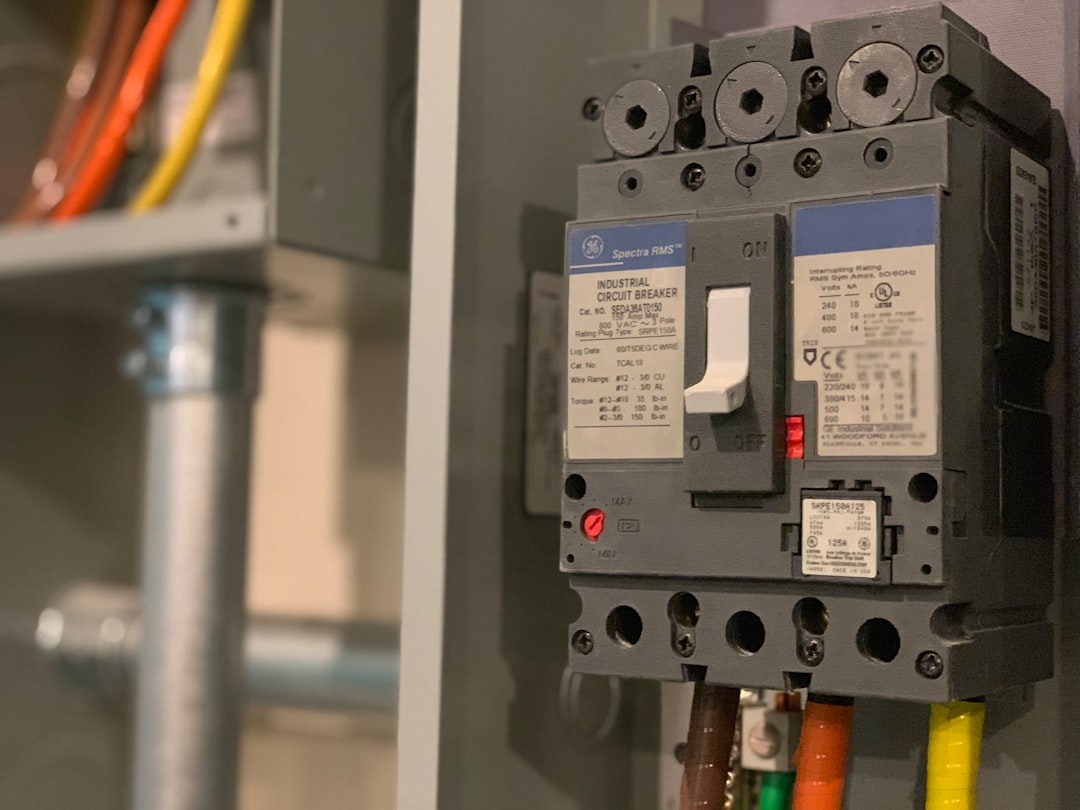

You just got home with your brand-new electric vehicle, excited to plug it in for the first time. You connect the charger, hear the satisfying click, and then, a split second later, bam! The MCB trips, plunging your home (or at least that circuit) into darkness. You reset it, try again, and the same thing happens. Naturally, you call an electrician. They check the wiring, the connections, maybe even your meter box, and declare, "Everything seems fine, no fault here." But the moment you try to charge your EV again, that stubborn MCB flips.
Quick answer
If your MCB trips within a second or two of starting to charge — but your electrician finds "no fault" — the usual culprits are the charger’s inrush current tripping a too-sensitive B-curve MCB, a weak earthing / high neutral-to-earth voltage, or a shared (non-dedicated) circuit. The fix is usually a C- or D-curve MCB on a dedicated circuit, plus an earthing check.

Why Your MCB Trips Instantly During EV Charging
This is a common, yet frustrating, scenario for many new EV owners in India. The key here is the instantaneous tripping, often within a couple of seconds of starting the charge, even when your electrician can't find a conventional short circuit or overload. This points to a specific type of electrical issue, often related to the high inrush current or specific earthing conditions that EV chargers demand.
1. Inrush Current: The Sudden Thirst for Power
When you switch on any electrical appliance, especially one with a motor or a large power supply (like an EV charger), it doesn't just smoothly draw power. For a brief moment, it pulls a much higher current than its rated operational current. This is called "inrush current." Think of it like a thirsty person gulping water – the initial sips are much faster and larger than the steady drinking that follows.
- EV Chargers and Inrush: EV chargers, particularly AC chargers, have capacitors and other components that need to charge up instantly when power is applied. This creates a very brief but very high surge of current.
- MCB Sensitivity: Your MCB (Miniature Circuit Breaker) is designed to protect your wiring from overcurrents. While it has a delay for sustained overloads, it's also designed to trip almost instantly on very high, sudden surges (short circuits). Sometimes, the inrush current from an EV charger can be just high enough and sudden enough to trigger a sensitive MCB, even if the steady charging current is well within its limits.
- The "No Fault" Mystery: Your electrician checks for continuous faults or sustained overloads. Since the inrush current is momentary, their standard tests might not detect it, leading them to conclude there's "no fault."
2. Earthing Issues: The Unseen Culprit
Indian electrical systems, especially in older buildings or societies, sometimes have less-than-ideal earthing. EV chargers are very sensitive to proper earthing for safety reasons. If the earthing system is weak or faulty, the charger might detect a potential leakage current and initiate a protective shutdown, which can sometimes manifest as an MCB trip.
- Residual Current Devices (RCDs/RCCBs): Many EV chargers have built-in RCDs or require an external one. An RCD is designed to trip if it detects even a small imbalance between the current flowing into and out of the circuit, indicating a leakage to earth. If your main MCB is also acting as a sensitive RCD (or if a separate RCD is tripping), it could be due to a genuine earth leakage or a very slight, transient one that the charger's sensitive electronics detect.
- High Neutral-to-Earth Voltage: In some Indian homes, you might find a significant voltage difference between the neutral wire and the earth wire. This indicates a problem with the earthing or neutral connection in your building. EV chargers are designed to operate within strict voltage parameters, and a high neutral-to-earth voltage can cause them to trip protective devices like MCBs or internal RCDs. Learn more in our EV charger earthing safety guide.

3. Undersized MCB or Incorrect Type
While you might think a 63A MCB is plenty for a 7kW or 11kW charger (which draw roughly 32A and 16A per phase, respectively), the type of MCB matters. MCBs come in different tripping characteristics, commonly B, C, and D curves.
- B-Curve MCBs: Trip very quickly on small overcurrents (2-3 times rated current). Common for purely resistive loads like geysers or heaters.
- C-Curve MCBs: Trip on moderate overcurrents (5-10 times rated current). Most common for general household use and motors.
- D-Curve MCBs: Trip on high overcurrents (10-20 times rated current). Used for loads with very high inrush currents, like large motors or transformers.
If your EV charger is connected to a B-curve MCB, or even a C-curve MCB that is particularly sensitive, its inrush current might be enough to trigger it. A D-curve MCB is often recommended for EV chargers due to their higher tolerance for momentary inrush currents, without compromising safety for sustained overloads.
4. Wiring Quality and Connections
Even if the main wiring seems fine, loose connections or slightly undersized wiring (even if technically rated for the current) can heat up rapidly under the sudden surge of an EV charger, leading to a momentary impedance change that can trigger an MCB. Poor quality switches or sockets in the circuit can also contribute.
5. Charger Internal Fault (Rare, But Possible)
While less likely if the tripping is immediate and consistent, a fault within the EV charger itself could cause an immediate trip. This could be a component failure that draws excessive current, or a fault in its internal protective mechanisms. However, this is usually ruled out if the charger works perfectly fine at another location or if a different charger also trips the same MCB.
What to Do When Your MCB Keeps Tripping
Before you get frustrated, here's a practical approach:
- Check MCB Type: Ask your electrician to verify the tripping curve (B, C, or D) of the MCB connected to your EV charger. If it's B, consider upgrading to a C-curve, or even a D-curve if the problem persists and your electrician approves.
- Dedicated Circuit: Ensure your EV charger has a dedicated circuit with its own MCB, directly from your meter box or distribution board. Do not share it with other heavy appliances like ACs, geysers, or refrigerators.
- Professional Earthing Check: Get a qualified electrician to perform a thorough earthing test (see why earthing is non-negotiable). They should check the earth pit resistance and the neutral-to-earth voltage. If these values are not within standard limits, improvements to your earthing system might be necessary. This is crucial for safety and charger longevity.
- Test at Another Location: If possible, try charging your EV at a friend's place or a public AC charger to see if the problem is specific to your home's electrical setup or if it's the charger/EV itself.
- Consult the Charger Manufacturer: If all else fails and your electrician cannot pinpoint an external fault, contact the EV charger manufacturer's support. They can guide you on specific electrical requirements or arrange a service visit to inspect the charger.
Remember, while an MCB trip is annoying, it's a safety feature doing its job. Understanding why it's tripping is the first step towards a safe and reliable EV charging experience at home.
MCB still tripping every time you plug in?
A dedicated circuit with the correct MCB, RCBO and earthing solves most nuisance trips. Zevpoint’s professional installation sets it up right the first time.
Book professional installation → or message Zevpoint support on WhatsApp.
Frequently asked questions
Why does my MCB trip instantly when EV charging starts?
Most often the charger’s brief inrush current is enough to trip a sensitive B-curve MCB. A C- or D-curve MCB rated for the charger, on a dedicated circuit, usually fixes it.
The electrician found no fault — what now?
Standard tests miss momentary inrush and transient earth-leakage. Ask specifically about the MCB curve type, a dedicated circuit, and an earthing / neutral-to-earth voltage check.
Is it safe to just fit a bigger MCB?
No — oversizing defeats the protection. The right answer is the correct curve type and rating for your charger on a dedicated circuit, done by a qualified electrician.


