
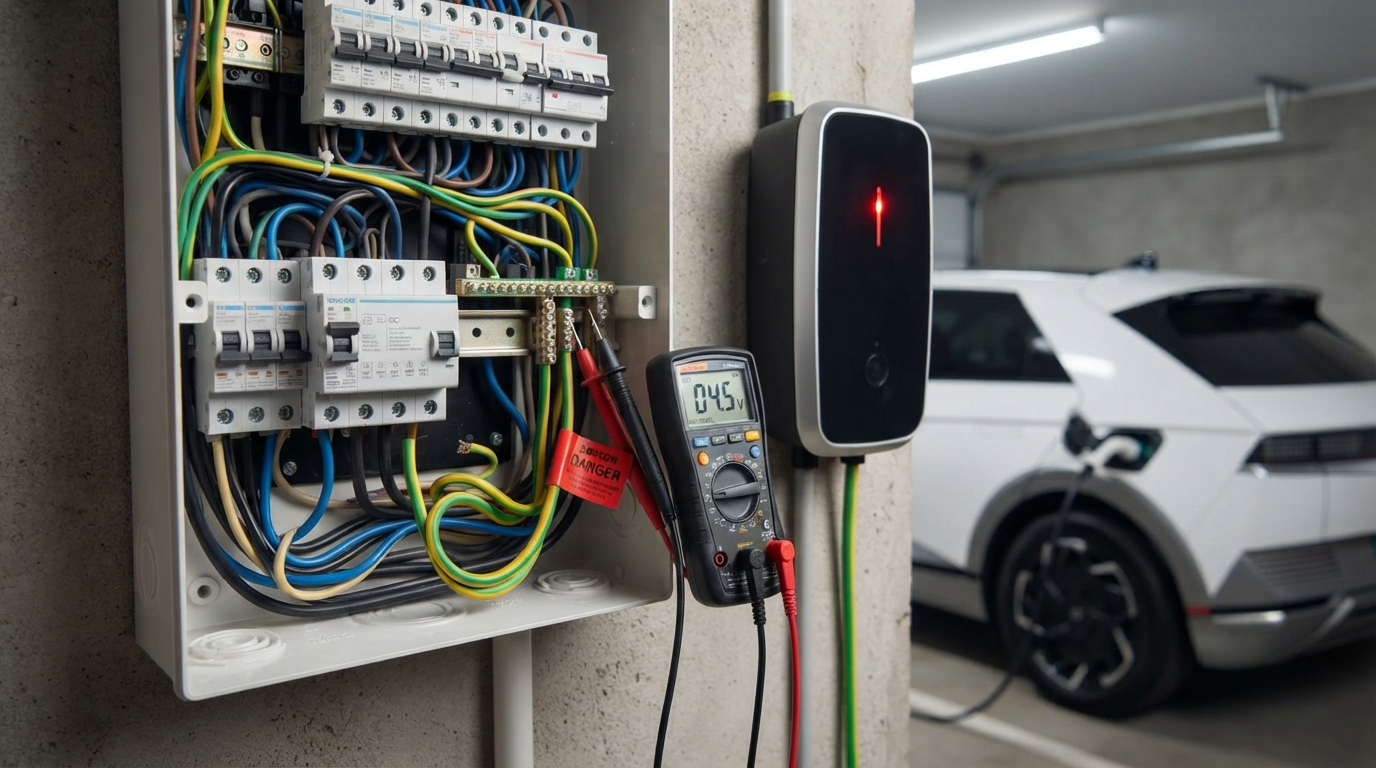

You’ve just installed your shiny new EV charger, eager to enjoy the convenience of home charging. You plug in your car, and… nothing. Or maybe it charges for a bit, then stops. After a lot of head-scratching and fiddling, you discover a strange workaround: if you switch off the MCB for the earthing line, suddenly the charger starts working perfectly. This isn’t just an odd glitch; it’s a red flag waving furiously, indicating a serious underlying electrical issue that needs immediate attention. Running your EV charger without proper earthing is not only dangerous but can also damage your vehicle or charger in the long run.
Understanding Earthing: Why It’s Non-Negotiable for EV Charging
Before we dive into troubleshooting, let’s quickly understand what earthing (or grounding) actually is. In simple terms, earthing provides a safe path for electricity to flow into the ground in case of a fault. Think of it as a safety valve. If there’s a short circuit, or if live wire accidentally touches the metal casing of an appliance, the excess current goes directly into the earth instead of passing through you or damaging the appliance. For high-power devices like EV chargers, which draw significant current, a robust earthing system is absolutely critical. In India, the standards for earthing are quite clear, and it’s not something you can afford to compromise on, especially with lakhs worth of EV parked outside.
The Dangers of Charging Without Earthing
- Electric Shock: This is the most immediate and severe risk. If there’s a fault and no earthing, the metal body of your charger or even your car could become live, leading to a fatal electric shock.
- Equipment Damage: Without a proper earth path, fault currents can flow through sensitive electronics in your charger or EV, causing irreparable damage. This is a costly affair, potentially voiding warranties.
- Fire Hazard: Overcurrents without proper dissipation can lead to overheating and, in extreme cases, electrical fires.
- Voided Warranty: Most EV charger manufacturers and EV makers will explicitly state that improper electrical installation, including inadequate earthing, will void your product warranty.
Common Reasons Your Charger Works Only with 'Earthing Off'
If your EV charger only functions when the earthing is disconnected, it almost certainly points to an issue with your electrical system's earthing. The charger is likely detecting a fault (like high leakage current or an incorrect earth potential) and shutting down as a safety measure. When you disconnect the earth, you're essentially bypassing this safety mechanism, which is like driving a car with the airbags disabled.
1. High Neutral-to-Earth Voltage
This is one of the most common culprits in Indian homes and societies. Ideally, the voltage between your neutral wire and the earth wire should be very close to zero (typically less than 2-3 volts). If it's significantly higher (say, 5V, 10V, or even more), your EV charger’s internal safety mechanisms will detect this imbalance and refuse to operate, or trip an RCD/RCCB. When you switch off the earthing, this voltage difference is no longer a factor for the charger's safety sensor, allowing it to function, albeit dangerously.
2. Leakage Current (Earth Fault)
Your EV charger has a built-in RCD (Residual Current Device) or requires an external one. This device is designed to detect even small amounts of current leakage to earth. If there’s any insulation breakdown in your wiring, charger, or even the EV itself, a tiny current might be leaking to earth. The RCD detects this and trips, cutting off power to prevent shock. When you disconnect the earth, the leakage path is removed, so the RCD won't trip, and the charger will appear to work.
3. Incorrect Wiring or Polarity Reversal
Though less common with modern installations, incorrect wiring where live and neutral are swapped, or where the earth wire is incorrectly connected, can confuse the charger's internal diagnostics. Some chargers are very sensitive to correct phasing and grounding. If the charger detects an unexpected potential difference on the earth line due to miswiring, it might shut down as a protective measure.
4. Poor Quality or Corroded Earth Pit
The effectiveness of your earthing system depends heavily on the quality of your earth pit. If the earth electrode is corroded, not buried deep enough, or the soil conductivity is poor (especially in dry conditions), the resistance to earth will be high. This means the earth path isn't effective at dissipating fault currents, and the charger's safety circuits might detect this poor connection and refuse to operate.
What to Do When Your Charger Works Only with 'Earthing Off'
This is not a problem you can solve with a DIY fix. You absolutely need a qualified and experienced electrician to diagnose and rectify the issue. Here’s a step-by-step approach:
Stop Using the Charger Immediately: Prioritise safety. Do not operate your EV charger with the earthing disconnected.
Contact a Licensed Electrician: Explain the exact symptoms. Emphasise that the charger works only when earthing is switched off.
Request a Thorough Electrical Audit: The electrician should check the following:
- Neutral-to-Earth Voltage: Measure this at your charger point and your main distribution board.
- Earth Pit Resistance: Using an earth tester, they should measure the resistance of your earth pit. Ideally, it should be below 5 ohms for residential connections, and even lower for high-load applications like EV charging.
- Continuity and Insulation Resistance: Check all wiring from your meter box to the charger point for proper continuity and insulation.
- RCD/RCCB Functionality: Ensure your RCD/RCCB is working correctly and is rated appropriately for your charger.
- Main Earthing System: Inspect the main earthing connections for corrosion or damage at your building’s main distribution panel and earth pit.
Consider a Dedicated Earth Pit: If your building's general earthing is problematic, your electrician might recommend installing a dedicated earth pit for your EV charger. This can often isolate your charger from general building earthing issues.
Isolate the Fault: If the problem persists after checking the main electrical supply and earthing, the electrician might need to isolate circuits one by one to find any appliance causing leakage current.
Consult the Charger Manufacturer: Once your electrical system is verified as sound, if the problem still persists, contact your EV charger manufacturer’s support. They might have specific diagnostic tools or advice for such scenarios.
A Word on Safety and Quality
While it might be tempting to find a quick fix, remember that electrical safety for EV charging is paramount. The power drawn by an EV charger is substantial, and any compromise in safety can have severe consequences. Always insist on proper earthing, use high-quality wiring and protective devices like RCDs, and ensure installation is done by certified professionals. Don't let the convenience of home charging come at the cost of safety. A small investment in proper electrical infrastructure now can save you lakhs in potential repairs and, more importantly, ensure the safety of your family and property.


