
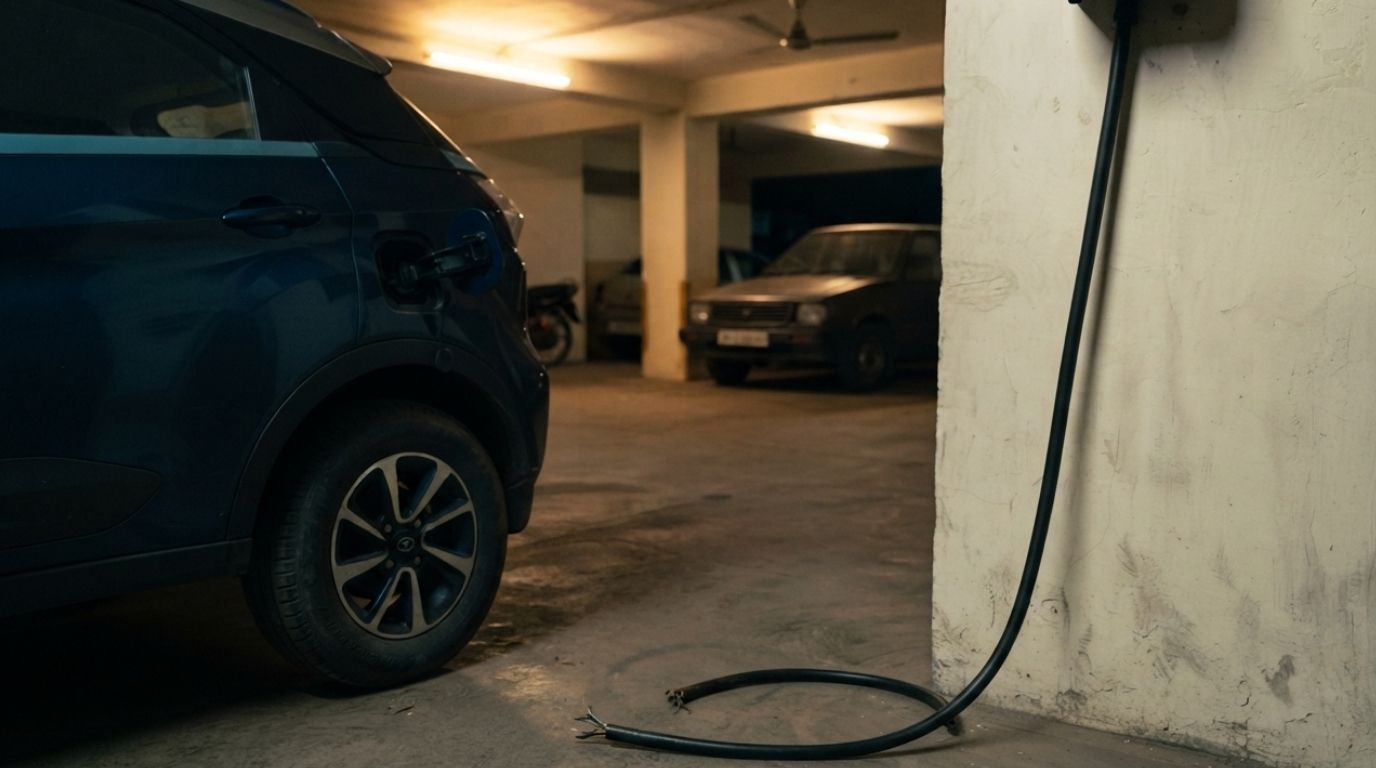

Imagine this: you've just parked your electric vehicle in your society's basement, plugged in your charger, and gone upstairs, confident that your car will be fully charged by morning. But when you come back, you find your charging gun unplugged, lying on the ground, or worse — missing entirely. This isn't a hypothetical scenario; it's a growing concern for EV owners across India, especially with reports of charging guns being stolen and sold for anything between ₹10,000 to ₹15,000. Protecting your EV charger and preventing unauthorized unplugging is becoming as crucial as securing your car itself.
Why EV Charger Theft and Unplugging is a Real Problem in India
The convenience of home charging is a major perk of owning an EV. However, this convenience comes with its own set of challenges, particularly in shared parking spaces common in Indian apartments and societies. Here's why this issue is gaining traction:
- Costly Equipment: The charging gun and cable assembly isn't cheap. Replacing a damaged or stolen one can set you back several thousand rupees, sometimes even a lakh for higher-end chargers. This isn't just a minor inconvenience; it's a significant financial hit.
- Vandalism and Misuse: Sometimes, it's not outright theft but deliberate unplugging or even vandalism. A disgruntled neighbour, an impatient driver needing the spot, or simply someone unaware of charging etiquette might unplug your vehicle. This can interrupt your charging cycle, leaving you with less range than expected.
- Resale Value: Stolen charging guns are reportedly being resold, indicating an organised racket. This makes them an attractive target for petty thieves who see easy money.
- Lack of Awareness: Many people, including other residents, might not understand the implications of unplugging an EV mid-charge or the value of the equipment.
The Financial Hit: What a Stolen Charging Gun Really Costs
Beyond the immediate replacement cost of ₹10,000-₹15,000 or more, consider the indirect costs. If your charger is stolen, you're left without a primary charging solution. This means relying on public chargers, which can be more expensive and less convenient, or even being stranded if you don't have enough range.
Practical Steps to Secure Your EV Charger and Prevent Unplugging
While there's no foolproof solution against determined thieves, several measures can significantly reduce the risk. These steps range from simple habits to more robust security installations.
1. Choose a Secure Location for Your Charger
If you're installing a new charger, placement is key. Opt for a spot that is:
- Visible: Install your charger in a well-lit area, ideally within sight of security cameras or where people frequently pass by. Thieves prefer dark, secluded spots.
- Close to Your Parking: Minimise the cable length exposed to public access. The less cable dangling, the less opportunity for tampering.
- Protected: If possible, install the charger inside a meter box or a dedicated enclosure that can be locked. This not only protects against theft but also against weather elements like monsoon rains.
2. Lock Your Charging Gun to Your EV
Most modern EVs have a locking mechanism that secures the charging gun to the car's charging port while it's charging. This is your first line of defence against unauthorized unplugging.
- Check Your Car's Manual: Understand how your specific EV's locking mechanism works. Some cars lock automatically when charging starts, while others require you to manually lock the car doors.
- Ensure it's Engaged: Always double-check that the gun is securely locked to your car before walking away. A gentle tug should confirm it's not easily detachable.
3. Secure the Charger Unit Itself
The wall-mounted charger unit, especially the tethered cable type, can also be a target. If the entire unit is stolen, or the cable is cut, it's an even bigger loss.
- Wall-Mounted Enclosures: Consider installing your charger within a robust, lockable enclosure. These can be custom-made or purchased ready-made. Ensure it's weather-proof and strong enough to deter tampering.
- Anti-Theft Screws: Use tamper-proof screws or bolts to mount the charger to the wall. Regular screws are easy to remove with a standard screwdriver.
- Cable Management: If your charger has a long, exposed cable, consider running it through a conduit or a protective sleeve that is secured to the wall.
4. Cable Locks and Padlocks for Added Security
For chargers with a detachable cable (untethered), you can use additional physical locks:
- Charging Cable Locks: These are specially designed locks that secure the charging cable to the charging station or even to a fixed object like a pole. They often resemble bicycle locks but are designed for the charging cable's thickness.
- Padlocks for Charger Holsters: Some chargers come with a holster where the charging gun rests when not in use. If your holster has a loop or an opening, you can use a padlock to secure the gun to the holster, preventing it from being easily lifted.
5. Smart Charger Features and Monitoring
Many smart EV chargers offer features that can help monitor and secure your charging process:
- App-Based Monitoring: Most smart chargers come with a mobile app that allows you to monitor charging status. Some even send notifications if charging is interrupted unexpectedly (e.g., due to unplugging).
- Remote Lock/Unlock: A few advanced chargers allow you to remotely lock or unlock the charging session, adding another layer of control.
- Access Control: If your charger is in a shared space, consider models that require RFID cards or app authentication to start charging. This prevents anyone from simply plugging in and using your electricity.
6. Communication and Awareness in Your Society
Sometimes, prevention is about educating others. Talk to your Resident Welfare Association (RWA) and fellow residents about responsible EV charging practices.
- Informative Posters: Put up polite, informative posters in the parking area explaining the importance of not unplugging EVs and the cost implications of theft.
- RWA Guidelines: Encourage your RWA to establish clear guidelines for EV charging in common areas, including rules against tampering with charging equipment.
- Security Staff Briefing: Brief your society's security guards about EV chargers and the need to report any suspicious activity around them.
What to Do if Your Charger is Stolen or Damaged
Despite all precautions, incidents can still happen. Here's a quick action plan:
- File an FIR: Immediately report the theft to the local police. This is crucial for insurance claims and for any chance of recovery.
- Inform Your Insurance: Contact your vehicle or home insurance provider. Some policies might cover accessory theft, especially if the charger is considered part of your vehicle's essential equipment.
- Contact Your Charger Manufacturer: They can guide you on replacement options and costs. Keep your purchase invoice handy.
- Review Security: Re-evaluate your parking and charging setup. Can you add more cameras, better lighting, or stronger physical locks?
Protecting your EV charger in India requires a multi-pronged approach – a combination of smart installation choices, physical deterrents, technological monitoring, and community awareness. By taking these proactive steps, you can significantly reduce the risk of theft and unauthorized unplugging, ensuring your EV charging experience remains convenient and worry-free.


