
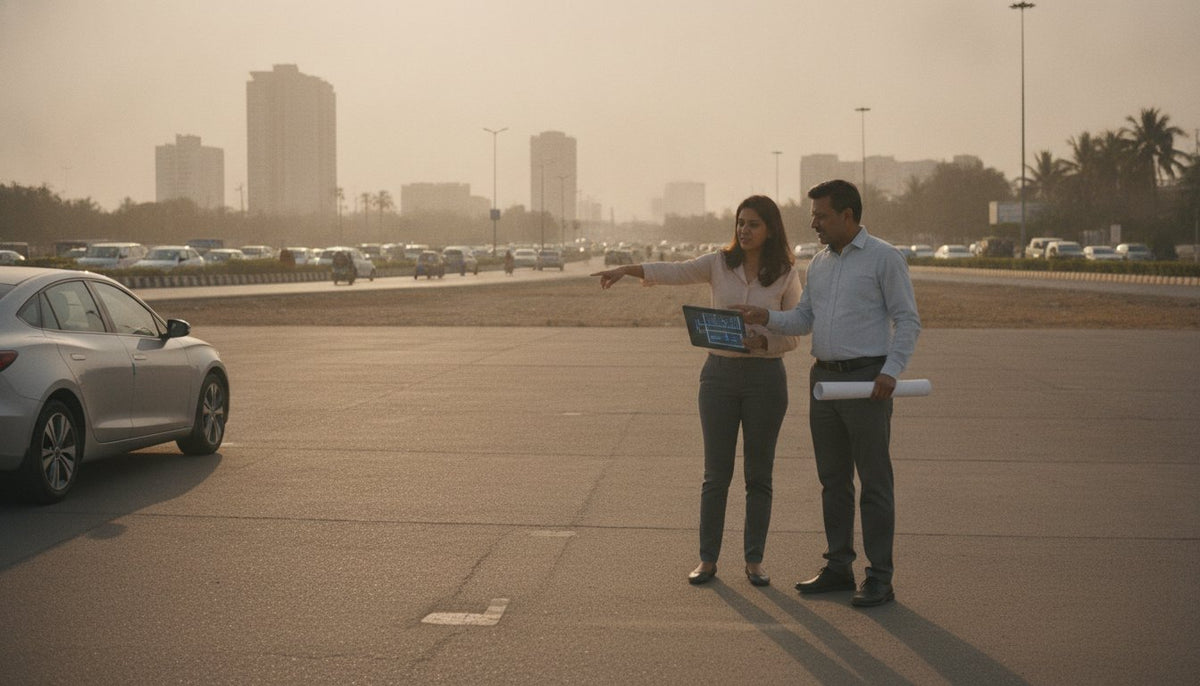

Updated on 1 November 2026.
Thinking of starting an EV charging station? You're not alone. It's one of the most searched business ideas in India right now, and for good reason: you don't need a licence, banks have started lending for it, and more electric cars hit the road every month. But it's also easy to get wrong. A charger in the wrong spot can sit idle for most of the day, and a lot of what you'll read online makes the money sound easier than it is.
This guide is our honest, step-by-step version. It covers the licence question, the investment, what a station really earns, franchise or your own, government schemes, and the order to do things in. Each section links to a deeper guide if you want more.
Quick summary
- No licence is needed. Setting up and running a charging station is a de-licensed activity under the Ministry of Power's guidelines.
- Location decides almost everything. The typical public DC charger in India is in use only about 2 hours a day. The best ones manage 11 hours or more.
- The investment depends on the chargers, the power connection and the civil work. Use our live DC charger prices and cost and earnings calculator rather than a number from a blog.
- You don't need a franchise. You can own the station, take payments by UPI and keep your own brand.
- Banks now have loans just for charging stations, like SBI EV Mitra and Indian Bank's IND Green Charge. Most government subsidies for stations go through government agencies, not to private owners directly.
Do you need a licence to start an EV charging station?
No. The Ministry of Power's 2024 guidelines say that setting up and operating an EV charging station is a de-licensed activity, so anyone can do it, as long as the station meets the technical and safety standards. What you do need is a proper power connection from your DISCOM, and depending on your site, some local approvals. Our approvals checklist lists everything.
Step 1: Decide what kind of station you want
There are three common types:
- Public station: open to any driver who pulls in. This is what most people mean by "charging station business".
- Captive charging: for your own fleet, staff, guests or customers, like at an office, hotel or car dealership.
- Fleet depot: for taxis, delivery vans, buses or trucks that come back to base to charge.
Then there's AC or DC. AC chargers are cheaper and fine where cars park for hours, like offices and hotels. DC fast chargers suit places where drivers want to be back on the road in 30 to 60 minutes. Read AC or DC: which suits your location and DC fast chargers explained.
Step 2: Pick the location carefully
This is the most important decision you'll make. We track how often public DC chargers across India are in use, and over the 30 days to 1 November 2026, the typical station's chargers were busy only about 9% of the time, roughly 2 hours a day. A quarter of stations did better than 24%, and the top tenth did better than 48%. Same chargers, wildly different results, and the difference is mostly the spot.
Look for:
- EVs already passing by, on a highway, a busy main road or near taxi stands.
- A reason to stop for 30 to 45 minutes: food, restrooms, a shop, a café.
- Easy entry and exit, and parking that won't get blocked by other cars.
- Enough power nearby, or a way to get it.
If you have land on a highway or a busy road but don't want to run a station yourself, you can also host one on your land.
Step 3: Check the power you can get
Every DC charger needs a three-phase supply, roughly a little more in kVA than its kW. Under the Ministry of Power's 2024 guidelines, if you apply for a separate LT connection for the charging station, the DISCOM has to provide up to 150 kW. Above that, you need an HT connection with your own transformer, which takes longer and costs more. Read LT or HT for the rules in your state.
Step 4: Choose the chargers
Pick chargers for the cars that will stop at your site, not the biggest you can afford. Smaller everyday cars usually take up to 60 kW, many newer SUVs take 100 kW or more, and premium cars can take over 200 kW. Our live table of what each car takes from a DC charger helps here. Then decide between one gun and two: see one dual-gun charger or two single ones.
How much investment does an EV charging station need?
It depends on three things: the chargers, the power connection, and the civil work. The chargers are the biggest single cost, and their price mostly follows their power. Our DC charger price page shows the current price of every charger we sell, from 30 kW to 240 kW. On top of that come the DISCOM's connection charges (and a transformer if you need HT), cabling, the electrical panel, a plinth, bollards, signs and maybe a canopy, plus installation and software.
Because the site changes the total so much, we don't quote one figure for everyone. Our cost and earnings calculator gives you a range for a whole station on your type of site in about a minute.
How much can an EV charging station earn per month?
Earnings come from the margin between what drivers pay per unit and what you pay for electricity, multiplied by how many units you sell. Units sold depend mostly on how many hours a day cars are plugged in. In our worked example, the same 60 kW charger earns anywhere from about ₹7,500 to ₹67,500 a month before rent, fixed charges, loan EMIs and tax, purely depending on how busy it is. We've laid out the maths and the real usage data in how much an EV charging station earns per month.
Franchise or your own station?
A few years ago, a franchise made sense because a new owner couldn't easily get a driver app, payments and software on their own. That's changed. Drivers can now pay by scanning a UPI QR code with no app, the money can go straight to your bank account, and charging software can carry your own name. A franchise usually means a joining fee, a share of every session and a long contract. Before you sign one, read do you need a franchise to run a charging station and our list of questions to ask before you sign.
Government schemes, subsidies and loans
- PM E-DRIVE: the central scheme supports charging stations, but government ministries, states, public sector companies and the public sector oil companies apply for it, not private owners directly. A private operator takes part by winning their tenders.
- State EV policies: several states pay back part of the charger cost or give cheaper EV tariffs. Rules differ by state and change often. See our EV charging subsidies guide, and our state guides for Tamil Nadu, Karnataka and Maharashtra.
- Bank loans: SBI EV Mitra lends from above ₹10 lakh up to ₹5 crore, and Indian Bank's new IND Green Charge goes up to ₹10 crore. Read EV charging station loans in India.
Step 5: Software and payments
Your station needs software to start sessions, take payments and show you what's happening. Make sure the chargers support OCPP, the open standard that lets you change software later, and that drivers can pay by UPI without downloading an app. Read what OCPP is, how UPI charging works and what charging software should do.
Step 6: Installation and opening
Most of the time goes into the power connection, so apply to your DISCOM as soon as you know the load. The civil and electrical work and the charger installation can run alongside it. Our DC charger installation guide walks through every step, from survey to the first car charging.
Step 7: Get found, and stay working
A new station needs a little marketing. Get it listed on maps, put up a sign that's visible from the road, and tell local taxi and delivery fleets. After that, uptime is everything. A charger that's broken when a driver arrives loses that driver, often for good. Read keeping a DC charger running.
Mistakes we see most often
- Choosing the site last, after buying the chargers.
- Expecting the station to be busy all day from week one.
- Buying more charger power than the local cars can take.
- Applying for too little load, then having to apply again for a second charger.
- Signing a long franchise contract without working out what it costs over the years.
- Planning the business around a subsidy that a private owner can't actually claim.
What we'd do
Start with the site, then the power, then the chargers. Get a rough number from the calculator, and when you're serious, book a site survey with the Project report. You get drawings and costs for your actual site, plus a demand study, expected revenue and years to break even, which is also what a bank will want to see. If you'd like to own and run the station yourself, see own and operate.
Frequently asked questions
Do I need a licence to start an EV charging station in India?
No. The Ministry of Power's guidelines make setting up and running a charging station a de-licensed activity. You need a proper power connection from your DISCOM and, depending on the site, some local approvals.
How much investment does an EV charging station need?
It depends on the chargers, the power connection and the civil work. Our DC charger price page shows live charger prices, and our cost and earnings calculator gives a range for a whole station on your type of site.
How much does an EV charging station earn per month?
It depends on how many hours a day cars are plugged in. In our worked example, one 60 kW charger earns from about ₹7,500 to ₹67,500 a month before rent, fixed charges, loan EMIs and tax, depending only on how busy the site is.
Do I need a franchise to open an EV charging station?
No. You can own the chargers, take payments by UPI with no app, and run the station under your own name. A franchise usually means a joining fee, a share of every session and a long contract.
Is there a government subsidy for EV charging stations?
PM E-DRIVE supports charging stations through government ministries, states, public sector companies and the public sector oil companies, not private owners directly. Several states have their own subsidies; see our EV charging subsidies guide.
Can I get a bank loan for an EV charging station?
Yes. SBI EV Mitra lends from above ₹10 lakh up to ₹5 crore, and Indian Bank's IND Green Charge goes up to ₹10 crore.
What is the best location for an EV charging station?
Somewhere EVs already pass and drivers have a reason to stop for 30 to 45 minutes, such as highways with food and restrooms, busy commercial areas or near taxi stands, with easy entry and enough power.


