
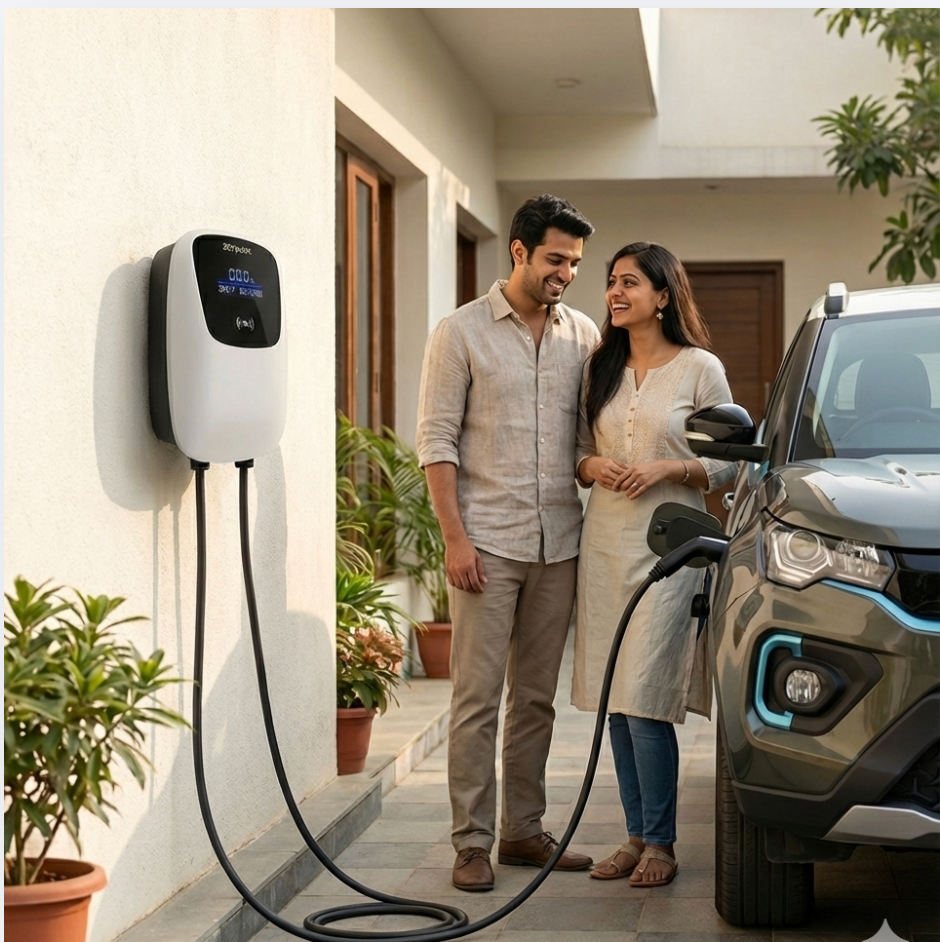

A quality EV charger, properly installed and reasonably maintained, can last 10 to 15 years — and often longer. Unlike a car that needs oil changes, brake pads, and regular servicing, an EV charger has no moving parts. There's no scheduled service you need to book every few months. But "low maintenance" doesn't mean "no maintenance." A few simple habits, spread across the year, can make the difference between a charger that works reliably for over a decade and one that starts giving trouble in three to four years.
This guide covers the practical maintenance steps that matter most, especially for Indian conditions where dust, heat, monsoon humidity, voltage fluctuations, and power surges are part of everyday life.
How Long Does an EV Charger Actually Last?
Most wall-mounted AC chargers are rated for a lifespan of 10 to 15 years under normal residential use. The key word here is "normal" — meaning one to two charging sessions per day, which is how most home chargers are used. Commercial chargers at offices, malls, or fleet depots see heavier use and may need component replacements sooner, but even they typically last 5 to 10 years with proper upkeep.
The internal components that determine lifespan include relays, contactors, circuit boards, and the charging connector itself. Higher-quality chargers use industrial-grade components for these parts, which is one reason why the cheapest charger on the market isn't always the smartest purchase. A well-built charger from a reputable brand like ZEVpoint, combined with the habits described below, should comfortably cross the 15-year mark.
What Does Regular EV Charger Maintenance Look Like?
EV charger maintenance isn't complicated. It breaks down into a few categories: connector and cable care, electrical infrastructure checks, software updates, and seasonal precautions. Here's what each involves.
How Should You Clean and Care for the Charging Connector?
The connector — the part you plug into your car — is the most exposed component of your charger. It handles the physical connection every single day, and over time, dust, moisture, and debris can accumulate inside the pins. This can lead to poor contact, slower charging, or error messages on your charger or car display.
Here's what to do:
- Wipe the connector with a dry, soft cloth once a month. If there's visible dust inside the pin housing, use a dry cotton bud or a gentle burst of compressed air. Never use water or household cleaners on the connector.
- Always use the protective cap when the connector isn't plugged into the car. Most chargers come with one — if yours has gone missing, contact the manufacturer for a replacement. An uncapped connector sitting in an open parking area collects dust, insects, and moisture remarkably quickly.
- When plugging or unplugging, grip the connector firmly and pull it straight out. Yanking at an angle, or pulling from the cable instead of the connector body, stresses the pins and the cable junction over time. This is one of the most common causes of connector damage.
How Often Should You Check the Charging Cable?
The charging cable itself is tougher than it looks — it's designed to handle thousands of plug-unplug cycles. But it's still worth a quick visual inspection every few months, especially if the cable runs along the ground or is exposed to sunlight.
Look for cracks, cuts, or fraying on the outer sheath. If any inner wiring is visible, stop using the cable immediately and contact your charger manufacturer. A damaged cable is a safety risk — it can cause short circuits or overheating at the damaged section.
Also check that the cable doesn't develop tight kinks from being coiled too aggressively. Chargers with built-in cable management hooks or holders help here — they encourage a gentle loop rather than a tight coil. If your charger doesn't have one, a simple wall-mounted cable holder costs very little and keeps the cable off the ground and properly supported.
It's normal for the cable to feel slightly warm during charging. If it ever feels hot to the touch, that's not normal. Stop the session, unplug, and get it inspected by the charger manufacturer or a qualified electrician.
What Electrical Checks Should You Do Annually?
Once a year, it's a good idea to have a certified electrician check the electrical infrastructure supporting your charger. This isn't about the charger itself — it's about the wiring, earthing, MCB, and any surge protection device in the circuit.
The key checks include:
- Earthing resistance: Should be under 10 ohms for safe charger operation. Over time, especially in dry climates or sandy soil, earth electrode resistance can drift upward. A simple earth resistance test with a megger confirms this. If you have chemical earthing, the compound may need topping up every few years.
- MCB and wiring: Check that the MCB trips correctly and that no wiring connections have loosened. Loose terminals are a common cause of overheating at junction points.
- Surge protection device (SPD): If you have an SPD installed (recommended, especially in lightning-prone areas), check its indicator. Most SPDs have a visual indicator — green means functional, red means it's been tripped by a past surge and needs replacement. An SPD that has already absorbed a major surge may not protect against the next one.
This annual check typically takes 30 to 45 minutes and costs very little. Think of it as an insurance policy for your charger and your car's onboard electronics.
Why Do Firmware Updates Matter?
If you have a smart charger — one that connects to Wi-Fi and has an app — firmware updates are part of maintenance. These updates aren't just about new features. They often include fixes for charging compatibility with newer car models, improvements to power delivery efficiency, and patches for communication protocols.
Most smart chargers push update notifications through their app. When you see one, don't ignore it. The update process usually takes a few minutes and happens over Wi-Fi — you don't need to be present or have the car plugged in. Some chargers, like ZEVpoint, push firmware and app updates regularly — which is a good sign that the product is actively maintained. If your charger hasn't received an update in over a year, that's worth questioning with the manufacturer.
A charger whose firmware is never updated may eventually develop compatibility issues with newer EV models or with the app itself.
How Should You Protect Your Charger During Monsoon Season?
Indian monsoons are the single biggest environmental challenge for EV chargers. The combination of heavy rain, high humidity, lightning storms, and power grid instability over three to four months puts real stress on electrical equipment.
Here's how to handle each concern:
Water and humidity. Any charger installed outdoors should have an IP rating of at least IP65 — meaning it's fully dust-tight and protected against water jets from any direction. For areas with extremely heavy rainfall, IP66 or IP67 provides even better protection. Check your charger's IP rating before the monsoon season. If it's IP54 or lower and installed in an exposed location, consider adding a weather-resistant enclosure or canopy.
Lightning and power surges. Lightning activity peaks during the Indian monsoon, and even a nearby strike can send a voltage surge through your home's wiring. An SPD in your charger's electrical circuit is the primary defense. If you don't have one already, getting one installed before monsoon is worth the ₹1,500–3,000 investment. During active thunderstorms, the safest practice is to simply not charge. Unplug the connector from the car and leave the charger idle until the storm passes.
Power fluctuations. Voltage drops and brief outages are common during monsoon. A quality charger with built-in voltage monitoring will pause the session automatically when voltage drops below safe levels and resume when conditions stabilize. If your charger doesn't have this feature, be cautious about starting long charging sessions during periods of unstable power supply.
Post-monsoon check. Once the monsoon season ends, do a quick inspection. Look for any water staining or moisture marks around the charger housing, check that drainage around the installation area is clear, and have the earthing resistance tested. Three to four months of wet soil can actually improve earthing resistance temporarily, but once the soil dries out in winter, resistance may climb — so testing in October or November gives you a good baseline.
What About Summer Heat — Does It Affect the Charger?
Yes, though the impact is more gradual than monsoon damage. Prolonged exposure to temperatures above 45°C — common across much of India from April to June — accelerates the aging of electronic components and can degrade cable insulation over years.
Practical steps for summer:
- Install the charger in a shaded or covered area whenever possible. Direct afternoon sun on a south or west-facing wall is the worst placement for charger longevity.
- If the charger is in direct sunlight, a simple wall-mounted shade or canopy helps significantly. It doesn't need to be elaborate — even a small overhang that keeps direct sun off the unit makes a difference.
- Avoid charging during peak afternoon heat if you have the flexibility. Early morning or late evening charging is easier on both the charger's electronics and the car's battery thermal management system.
- Make sure there's adequate ventilation around the charger. Don't box it in with storage, planters, or other objects that block airflow.
Does the Installation Quality Affect How Long the Charger Lasts?
Absolutely — and this is arguably the single biggest factor in charger longevity. A great charger with poor installation will fail sooner than an average charger with excellent installation.
The installation factors that directly impact lifespan include the quality of earthing (poor earthing stresses the charger's internal protection circuits every session), the gauge and quality of wiring from the distribution board to the charger, the tightness of all terminal connections, the MCB and SPD sizing (correctly rated for the charger's power draw), and the physical mounting — a charger that's not firmly secured vibrates slightly with every session, and those micro-vibrations loosen internal connections over years.
If your charger was installed as part of the purchase, the manufacturer's installation team should have handled all of this. If you installed it independently, or if you're unsure about the installation quality, having an electrician review the setup once is a worthwhile investment.
What Maintenance Does a Portable Charger Need?
Portable chargers that plug into a regular wall socket need the same connector and cable care as wall-mounted units. But they have a couple of additional considerations.
Since portable chargers are moved around, the cable and plug see more physical stress. Pay extra attention to the wall plug — look for burn marks, discoloration, or a loose fit in the socket. A plug that wobbles in the socket generates heat at the contact points, which damages both the plug and the socket over time.
Store your portable charger in a dry, dust-free location when not in use. The carry bag it came with exists for a reason — it keeps dust out of the connector and protects the cable from getting tangled or kinked. If you keep it in your car's boot, make sure it's not being compressed under heavy items.
What Are the Most Common Mistakes That Shorten Charger Life?
Based on real-world service data, these are the habits and conditions that lead to premature charger issues:
- Leaving the connector uncapped and exposed to rain, dust, or direct sunlight when not in use.
- Pulling the cable at an angle or from the cable itself instead of gripping the connector body.
- Ignoring loose or warm wall sockets (for portable chargers).
- Skipping earthing maintenance — earthing resistance that's too high puts silent, cumulative stress on charger electronics.
- Not installing an SPD in lightning-prone areas. One good surge during monsoon can take out the charger's control board.
- Ignoring firmware updates, leading to compatibility issues with newer EV models.
- Installing the charger in a fully enclosed, unventilated space where heat builds up.
- Using extension cords or multi-plug adapters with portable chargers — these are not rated for sustained high-current loads.
A Simple Maintenance Calendar
Here's a practical schedule that covers everything without being burdensome:
- Monthly: Wipe the connector with a dry cloth. Check the protective cap. Do a quick visual scan of the cable.
- Every 6 months: Inspect the full cable length for cracks, cuts, or tight kinks. Check the wall plug condition (portable chargers). Update firmware if a notification is pending.
- Annually (ideally pre-monsoon, around May): Have an electrician test earthing resistance, check MCB operation, inspect wiring connections for looseness, and verify SPD status.
- Post-monsoon (October): Inspect the charger housing for moisture marks. Retest earthing. Clear drainage around the installation area.
- Post-summer (July): Check cable insulation for heat-related degradation if the charger is installed in direct sunlight.
Frequently Asked Questions
Can I clean my EV charger with water?
The charger housing can be wiped with a damp cloth, but never spray water directly on the unit, the connector, or the cable junction. The connector's internal pins should only be cleaned with a dry cloth or compressed air. Water inside the connector can cause short circuits or corrosion on the contact pins.
My charger shows an error after a power cut. What should I do?
Most chargers recover automatically after power is restored. If the error persists, switch off the MCB, wait 30 seconds, and switch it back on — this is essentially a hard reset. If the error still appears, check whether a firmware update is available. Persistent errors after power events may indicate SPD damage or an earthing issue, both of which need an electrician's inspection.
Is it worth getting an annual maintenance contract for my home charger?
For a single home charger, an annual maintenance contract is usually unnecessary. The maintenance described in this guide is simple enough to handle yourself, with one annual electrician visit for the earthing and electrical checks. AMCs make more sense for commercial setups with multiple chargers, where uptime directly affects revenue.


