

You’ve invested in an EV, got your home charger, and are looking forward to convenient charging. But then you notice something peculiar: your charger works perfectly fine at, say, 27 Amperes (A), but consistently trips or fails when you try to push it to its rated 32A. It’s not an intermittent issue; it’s a repeatable problem that leaves you scratching your head, especially if it happens at both your single-phase home and your three-phase office. This isn't just an inconvenience; it means you're not getting the full charging speed you paid for.
Understanding Why Your Charger Trips at Higher Amperage
When an EV charger consistently trips at a specific higher amperage, but works fine at a slightly lower one, it usually points to a bottleneck in your electrical system. The charger itself might be capable of delivering 32A, but something upstream is unable to handle that sustained load. Think of it like a pipeline: if the main pipe is wide enough for 32 litres per second, but a section of it is narrower, you'll only get as much flow as the narrowest point allows before pressure builds up and the system shuts down.
This isn't always a fault with the charger. In fact, more often than not, the charger is simply doing its job by detecting an issue and shutting down to prevent damage or fire. The key is to identify *where* that bottleneck is.
Common Culprits Behind Current Derating
Several factors can cause your charger to trip at higher amperages:
- Inadequate Wiring: This is perhaps the most common reason. If the copper wiring from your meter box to your charger point isn't thick enough (i.e., too thin a gauge) for 32A, it will heat up excessively, causing voltage drop and eventually tripping the MCB or the charger's internal protection.
- Weak MCB (Miniature Circuit Breaker): Your MCB might be rated for 32A, but it could be old, faulty, or of poor quality. MCBs degrade over time, and a cheap or worn-out MCB might trip prematurely under sustained high load.
- Voltage Drop: Long cable runs, especially with thinner wires, lead to significant voltage drop. If the voltage at the charger terminal dips too low when drawing 32A, the charger's under-voltage protection will activate.
- Loose Connections: Any loose connection in the wiring path – at the MCB, the isolator, the socket, or inside the charger itself – can create resistance, generate heat, and lead to voltage drops, triggering a trip.
- Grid Supply Issues: Sometimes, the problem isn't inside your home but with the electricity supply itself. If the grid voltage fluctuates or dips significantly when you draw high current, your charger will protect itself.
Troubleshooting Steps: What to Check
Here’s a systematic approach to diagnose why your charger is struggling at 32A:
1. Inspect Your Wiring
This is where you start. For a 32A charger, you typically need a cable of at least 6 sq.mm for runs up to about 30-40 metres, and often 10 sq.mm for longer distances or if you want extra headroom. If your electrician used a thinner cable (e.g., 4 sq.mm) thinking it would be 'enough', it might be the culprit. Check the cable's marking for its gauge.
2. Evaluate Your MCB and Electrical Components
First, confirm the MCB rating. Is it actually 32A? If it's a 'C' curve MCB, it's generally suitable for EV chargers. If it's an older 'B' curve, it might be more sensitive. Consider replacing an old MCB with a new, good quality 32A 'C' curve MCB from a reputable brand. Also, check any other components in the circuit, like isolators or contactors, to ensure they are rated for 32A continuous operation.
3. Check for Voltage Drop
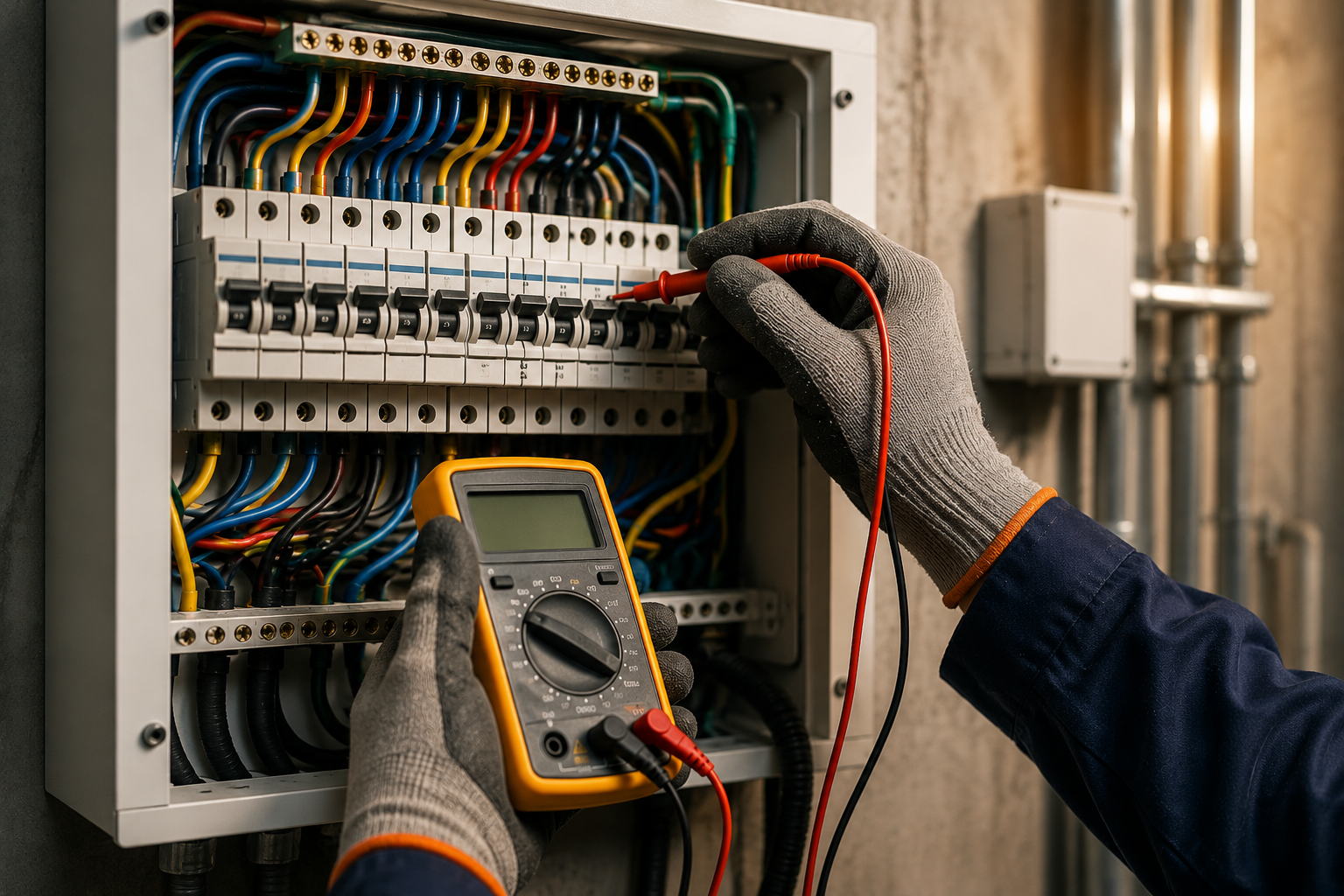
This requires a multimeter. Ask an electrician to measure the voltage at your charger's input terminals while it's charging at 27A and then again just before it trips at 32A. A significant drop (more than 5-7% from your nominal grid voltage, e.g., dropping from 230V to below 215V) indicates an issue with wiring or supply. Long cable runs or thin wires are the main culprits here.
4. Tighten All Connections
Loose connections are silent killers. Have your electrician open up the meter box, the distribution board, the isolator, and the charger's connection point to ensure all wire terminals are securely tightened. This is a critical safety check and can resolve many mysterious tripping issues.
5. Monitor Grid Supply
If you suspect grid issues, you can use a voltage logger or ask your electrician to monitor the main supply voltage over a period. If the grid voltage is consistently low or dips sharply when heavy loads (like your AC or geyser) are switched on, it could be contributing to the problem.
6. Test the Charger Itself
If you've ruled out all the above, try testing your charger at a different location (perhaps a friend's house with known good wiring and a 32A connection) or ask your charger service provider to test it. This will help confirm if the issue is with the charger or your electrical infrastructure.
Seeking Professional Help
Unless you are a qualified electrician, do not attempt to troubleshoot electrical issues yourself. Always call a certified electrician who understands EV charging requirements. They can perform proper load calculations, measure voltage drops accurately, and ensure all wiring and components meet safety standards.
Remember, your EV charger is designed to protect itself and your vehicle. When it trips, it's usually a warning sign. Addressing the root cause of consistent power drops at higher amperages will ensure a safe, efficient, and hassle-free EV charging experience for years to come.
Final Checklist for Your Electrician:
- Confirm existing wire gauge and compare with 32A requirement.
- Verify MCB rating and quality; consider upgrading to a C-curve if not already.
- Check for voltage drop at the charger terminals under load.
- Inspect and tighten all electrical connections.
- Ensure earthing is robust and proper.


