
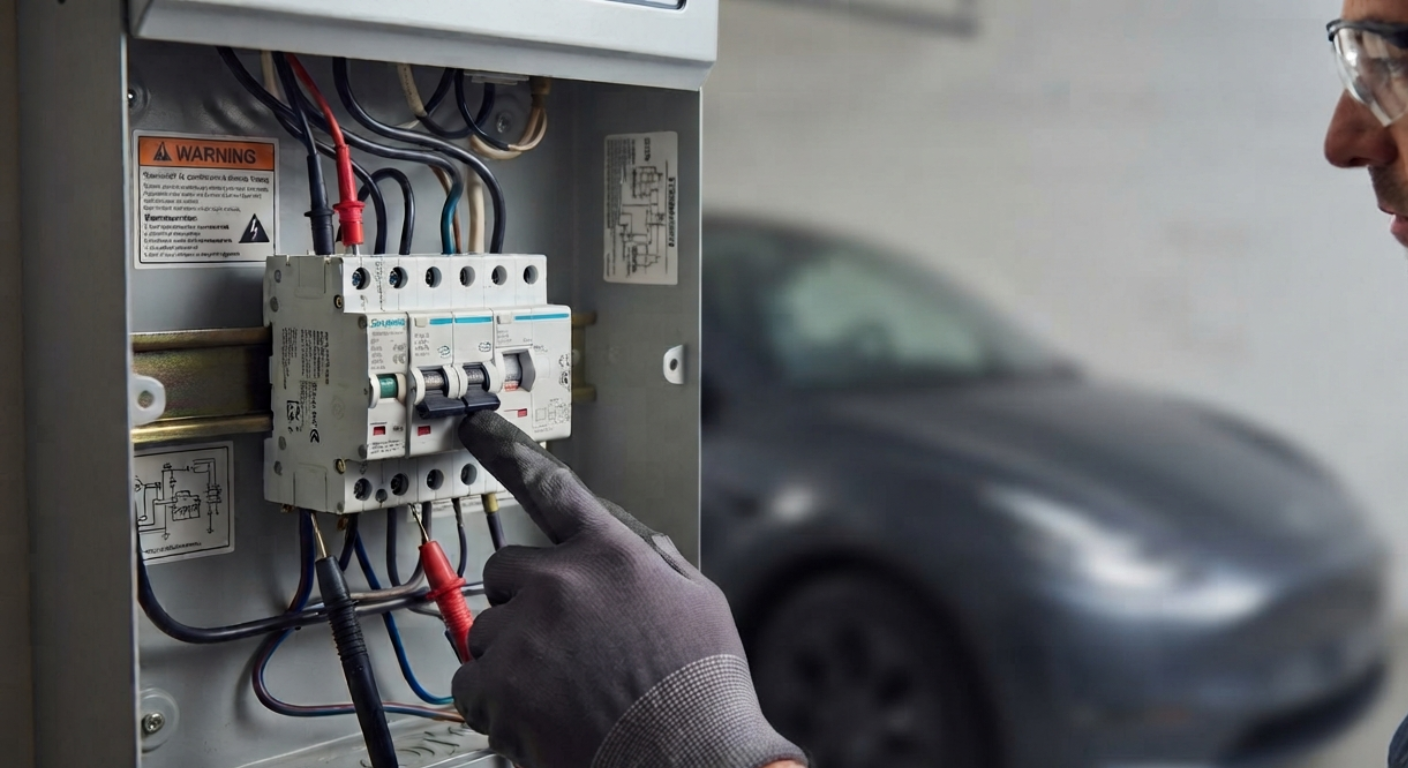

You plug in your electric vehicle, the home charger whirs to life, and the charging indicator glows green. You walk away, expecting a steady charge, only to return a few minutes later to find everything off. The charger has tripped, or worse, the MCB in your meter box has flipped. You reset it, try again, and the same thing happens within five minutes. If this sounds familiar, you're not alone. This intermittent tripping, where charging starts but quickly stops, is a frustratingly common issue for many EV owners in India, and it can be tricky to diagnose because the fault isn't always obvious.
Why Your EV Charger Starts But Trips Within Minutes
When your EV charger trips shortly after starting, it's a clear sign that something in the electrical circuit is exceeding its safety limits. Unlike a complete failure where the charger never starts, this 'starts then stops' behaviour points to an overload or a fault that develops as the system draws full power.
The Usual Suspects: Where to Look First
- Overloaded Circuit: Your home's electrical wiring, MCB (Miniature Circuit Breaker), and even the main supply from your electricity board are designed for a certain load. If your EV charger, which is a significant load, pushes the circuit beyond its capacity, the MCB will trip as a safety measure.
- Faulty Earthing: Proper earthing (grounding) is crucial for electrical safety. If the earthing is weak, intermittent, or completely absent, the charger's internal safety mechanisms (like an RCCB or RCD) might detect a leakage current and trip to prevent electrocution.
- Voltage Fluctuations: Indian grids can sometimes experience voltage sags or spikes. While a charger can handle minor variations, a significant dip in voltage can cause it to draw more current to compensate, leading to an overload and tripping. Conversely, a sudden surge can also trigger protective shutdowns.
- Charger Malfunction: Though less common for intermittent issues, the charger itself could have an internal fault. Components might be overheating, or a sensor could be malfunctioning, leading to a premature shutdown.
- EV's On-Board Charger (OBC) Issues: This is a crucial point many people miss. The car itself has an on-board charger that converts AC power from your home into DC power for the battery. If the OBC is faulty, it can draw power erratically or develop an internal fault, causing the home charger to trip. This is especially likely if you've tried different home chargers and the problem persists.
Troubleshooting Steps for Intermittent Tripping
Before calling an electrician or the charger company, try these systematic steps to narrow down the problem. Remember, always prioritise safety and if you're unsure, call a qualified professional.
Step 1: Isolate the Problem – Charger, Car, or Home Wiring?
The first thing to confirm is whether the issue lies with your home's electrical setup, the EV charger itself, or your electric vehicle's on-board charging system.
- Try a Different Charger (if possible): If you have access to another compatible home charger, try using it. If the problem persists with the second charger, it strongly suggests an issue with your home's wiring or your car's OBC.
- Try Charging Your EV Elsewhere: If possible, try charging your EV at a public AC charger or a friend's home charger. If your car charges perfectly there, the problem is likely with your home setup or your specific home charger. If it still trips elsewhere, the fault is almost certainly with your EV's OBC.
Step 2: Check Your Home Electrical System
MCB Rating and Load
Check the rating of the MCB connected to your EV charger circuit. For a 7.2 kW charger, you typically need a 32A MCB. For a 3.3 kW charger, a 16A MCB is usually sufficient. If your MCB is lower than recommended, or if other high-power appliances (AC, geyser, induction cooktop) are running on the same circuit, it can lead to an overload.
- Action: Turn off all other high-power appliances in your home. Try charging your EV. If it charges without tripping, your circuit is overloaded. You might need a dedicated circuit for your EV charger.
Wiring and Cable Quality
Undersized or old wiring can heat up under sustained load, leading to voltage drops and increased current draw, which can trip the MCB. For a 7.2 kW charger, a 6 sq mm copper wire is generally recommended for shorter runs, while for longer runs (say, more than 20-25 metres), 10 sq mm might be necessary to prevent voltage drop.
- Action: Visually inspect the wiring leading to your charger. Look for any signs of damage, fraying, or loose connections. Never touch live wires.
Earthing (Grounding) Issues
Faulty earthing is a common culprit in India. An improper earth connection can cause residual current devices (RCDs) or residual current circuit breakers (RCCBs) within your charger or home panel to trip.
- Action: While you can't easily check earthing quality yourself without a multimeter, if you suspect this, it's time to call a qualified electrician. They can measure earth resistance and check for neutral-to-earth voltage.
Voltage Stability
Voltage fluctuations can be a major headache, especially in areas with inconsistent power supply.
- Action: If your charger has a display, check the input voltage reading just before it trips. You can also use a simple voltage meter at your socket. If the voltage drops significantly (e.g., below 200V for a 230V supply) when charging starts, your grid supply might be unstable.
Step 3: Consider Your EV's On-Board Charger (OBC)
If you've ruled out your home wiring and tried a different charger with the same result, the problem is very likely with your EV's OBC. This is the component inside your car that manages the AC charging process.
- Symptoms: The car might start charging, communicate with the home charger, but then an internal fault in the OBC causes it to draw power erratically or shut down, which in turn trips your home charger's safety features or your MCB.
- Action: If you suspect the OBC, you'll need to take your EV to an authorised service centre. Explain the intermittent tripping issue, especially if you've already tried charging at different locations or with different home chargers.
When to Call a Professional
While some basic checks can be done by a vigilant EV owner, anything involving opening meter boxes, checking internal wiring, or dealing with potentially faulty main supply lines should always be handled by a certified electrician. If the problem persists after your initial troubleshooting, don't delay – get professional help.
- For Home Electrical Issues: Contact a licensed electrician. Ask them to specifically check for:
- MCB rating and health
- Wiring gauge and condition
- Earth resistance and neutral-to-earth voltage
- Any loose connections in the meter box or distribution board
- For Charger Issues: Contact the manufacturer of your EV charger. They can guide you through specific diagnostic steps for their unit or arrange for a service visit.
- For EV On-Board Charger (OBC) Issues: Take your EV to the brand's authorised service centre. Be prepared to explain the troubleshooting steps you've already taken.
The ZevPoint Approach to Reliable Charging
At ZevPoint, we understand the frustration of intermittent charging. Our chargers are designed with robust safety features and intelligent diagnostics to minimise such issues. However, the charger is just one part of the equation. A healthy home electrical system and a well-functioning EV are equally important for a smooth charging experience. If you're facing persistent issues, consider reaching out to a ZevPoint certified technician who can often provide a comprehensive diagnostic audit of your entire home charging setup, helping you pinpoint the exact cause of the problem.
Final Checklist
Before you lose your cool, run through this quick checklist:
- Have you tried charging your EV at another location (public charger, friend's house)?
- Have you tried a different home charger (if available)?
- Is your MCB rated correctly for your charger's power (e.g., 32A for 7.2kW)?
- Are other high-power appliances switched off during charging?
- Have you checked for obvious signs of loose or damaged wiring?
- When did your home's earthing last get checked?
Addressing intermittent charging stops quickly is important not just for convenience, but also for the longevity of your charger and your EV's electrical components. Happy charging!


