
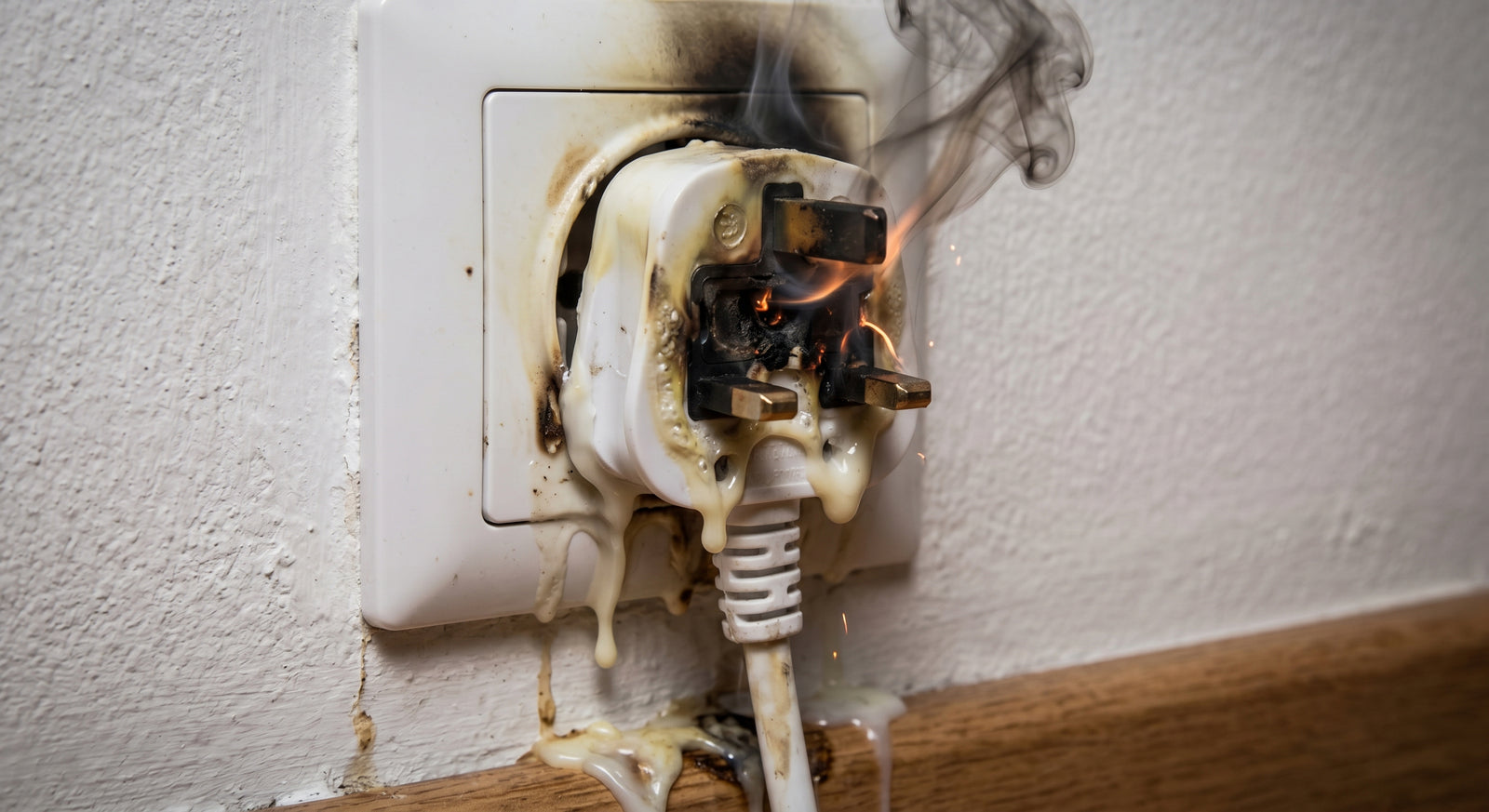

You just got an electric vehicle, and the convenience of charging it at home feels like a dream come true. You plug it into a standard 16A socket, perhaps the same one you use for your AC or geyser, and everything seems fine for a while. But then, after a few long charging sessions, you start noticing something concerning: the socket feels unusually hot, or worse, you see discolouration or even slight melting around the pins. This isn't just an inconvenience; it's a serious safety hazard that many new EV owners in India face.
Why Your 16A Socket Struggles with EV Charging
A standard 16A wall socket, commonly found in Indian homes, is designed for appliances that draw high current for short durations or moderate current continuously. Think of your geyser or an AC unit. They might draw 15-16 Amperes, but a geyser typically runs for only 15-30 minutes, and an AC cycles on and off. An EV, on the other hand, can draw a continuous 15 Amperes (for a 3.3 kW portable charger) for 6-8 hours, or even longer, to fully charge its battery. This prolonged, heavy load is where the problem starts.
Here's a breakdown of why this happens:
- Continuous High Current: Unlike most home appliances, an EV charger demands a steady, high current for many hours. This sustained draw generates a lot of heat.
- Socket Quality: Many 16A sockets installed in older homes or by cost-cutting electricians aren't built to handle such continuous loads. The internal contacts might be made of cheaper, thinner material that heats up excessively.
- Wiring Quality: Even if your socket is decent, the wiring behind it might not be. Standard 4mm copper wire is often used for 16A circuits, but for continuous EV charging, especially over longer distances from the meter box, it might not be sufficient to dissipate the heat generated.
- Loose Connections: Over time, or due to poor initial installation, the internal connections within the socket or where the wires meet the socket can become loose. A loose connection increases electrical resistance, which in turn generates even more heat.
The Heat Generation Cycle
When current flows through any conductor, it generates heat. The amount of heat generated is proportional to the square of the current and the resistance (H = I²RT). If the resistance is high (due to poor quality materials or loose connections) and the current is continuously high for a long time, the temperature can rise to dangerous levels. This heat can melt the plastic body of the socket, damage the internal contacts, and even scorch the wall.
The Risks of Overheating Sockets
Ignoring an overheating or melting 16A socket is extremely dangerous. The risks include:
- Fire Hazard: This is the most critical risk. Excessive heat can ignite nearby combustible materials, leading to a house fire.
- Electrical Damage: The heat can damage your home's wiring, leading to short circuits or complete failure of the circuit.
- Charger Damage: Your EV charger itself can be damaged by inconsistent power delivery or extreme heat feedback from the socket.
- EV Battery Damage: While less common, prolonged charging with unstable power can potentially stress your EV's battery management system.
- Reduced Charging Efficiency: Heat means wasted energy. A hot socket indicates energy loss, meaning you're paying for electricity that isn't efficiently going into your car.
Upgrades for Safe EV Home Charging
To ensure safe and efficient EV charging at home, especially if you're using a 3.3 kW portable charger or plan to install a dedicated wall-mounted charger, you need to upgrade your electrical infrastructure. Here’s what you should consider:
1. Dedicated 16A Industrial Socket
Instead of a regular household 16A socket, opt for an industrial-grade socket. These are often blue in colour and comply with international standards like IEC 60309. They are designed for continuous, heavy-duty applications and have robust internal contacts and a more secure locking mechanism for the plug.
2. Proper Wiring Gauge
For a 3.3 kW charger (which typically draws around 15 Amperes), a dedicated circuit with 4 sq mm (square millimetre) copper wiring is generally recommended from your meter box to the charging point. If the distance from your meter box to the parking spot is very long (say, more than 20-25 meters), or if you plan to install a higher power charger (like 7.2 kW which needs a 32A circuit), you might need to upgrade to 6 sq mm or even 10 sq mm wiring to minimise voltage drop and heat generation. Always consult a qualified electrician for this.
3. Dedicated MCB and Safety Devices
Your EV charging point should have its own dedicated Miniature Circuit Breaker (MCB) in your distribution board. This ensures that if there's an overload or short circuit at the charging point, only that circuit trips, not your entire home's power. Additionally, consider installing a Surge Protection Device (SPD) for enhanced safety against electrical shocks and voltage spikes.
4. Professional Installation
This is non-negotiable. Don't rely on local, inexperienced electricians for EV charger installation. A certified EV installation expert understands the specific requirements, safety standards, and load calculations needed for reliable EV charging. They will ensure proper earthing, correct wire sizing, and secure connections.
5. Regular Checks
Even with upgrades, it's a good practice to periodically check your charging socket and plug. If you notice any warmth, discolouration, or a burning smell, immediately stop charging and call an electrician.
The ZevPoint Recommendation
For a reliable and safe home charging experience, move beyond the standard 16A household socket. Invest in a dedicated, high-quality industrial-grade socket with appropriate wiring and safety devices, installed by a certified professional. This upfront investment is minor compared to the cost of potential damage or, worse, a fire. It ensures peace of mind and a consistent, efficient charge for your electric vehicle, letting you enjoy the future of mobility without worrying about melting sockets.
Before you plug in your EV for another long charging session, take a moment to inspect your existing setup. If it's a regular 16A socket that's showing signs of stress, it's time for an upgrade. Speak to an electrician who understands EV charging requirements and get a proper assessment of your home's electrical capacity.


